
The Inevitable
The Inevitable
Mark Adams, Joyce Campbell, Conor Clarke, Megan Jenkinson and Sam Norton
Essay by Virginia Were
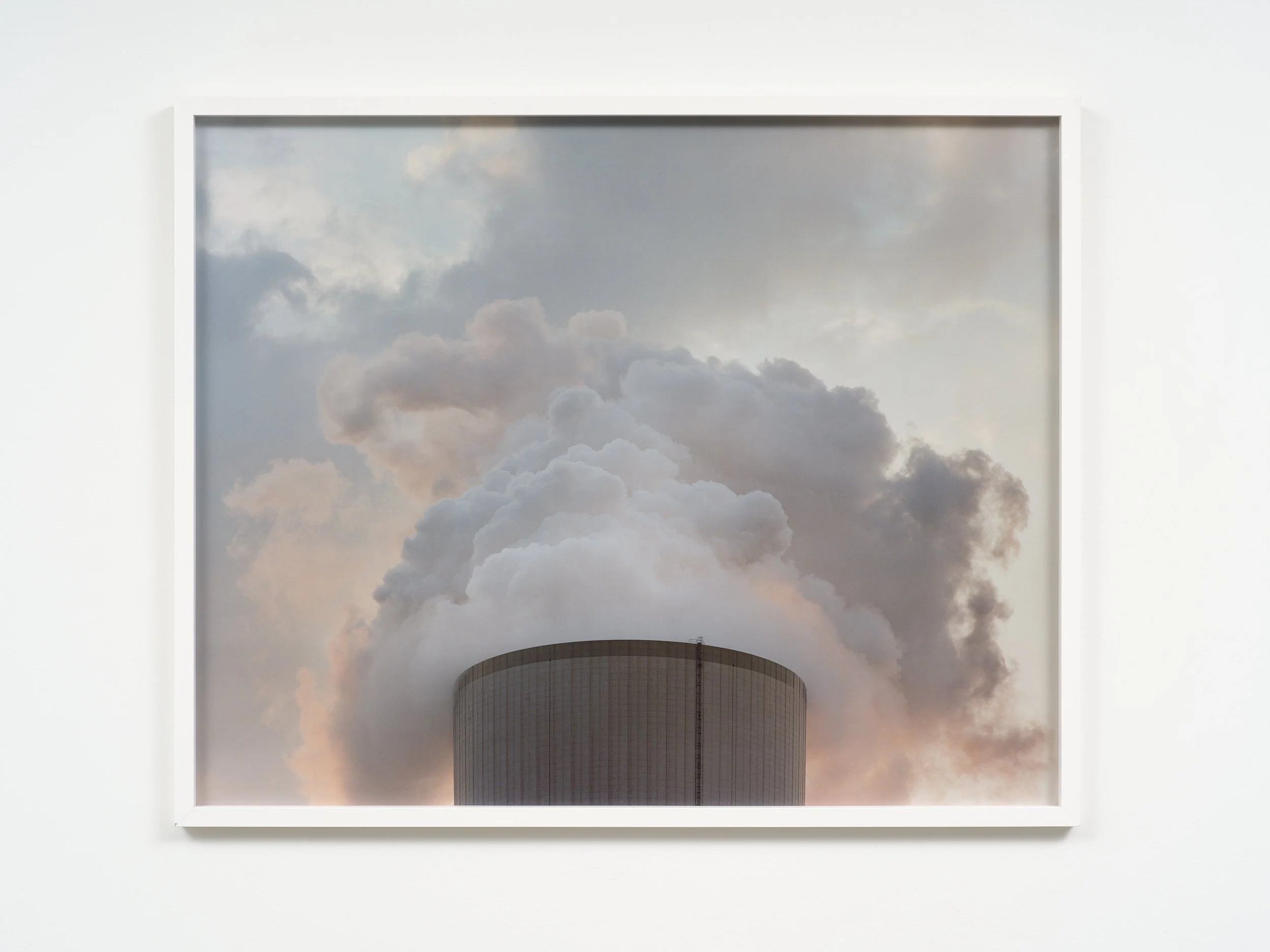
Conor Clarke, Duisburg-Walsum, Nordrhein-Westfalen (2014)
The Inevitable is an exhibition of photographs by Mark Adams, Joyce Campbell, Conor Clarke, Megan Jenkinson and Sam Norton. These works document landscapes transformed by elemental forces – earth, water, air and fire – in diverse locations, from the volcanic island of Savai’i in Samoa, a marginal desert space in Southern California, coal-fired power stations in Germany, the Dry Valleys of Antarctica, to Christchurch’s Port Hills.
The title of this exhibition implies certainty and finality and can be read as a provocation in two ways: one in relation to the perception of photographs as stable objects with fixed meanings; the other in relation to our current reality as citizens living in a fossil-fuel-driven Capitalocene that offers very little certainty of a peaceful and flourishing future for humans and nonhumas alike. Can we predict with confidence that any outcome – social, cultural, political, environmental – is inevitable in these times?
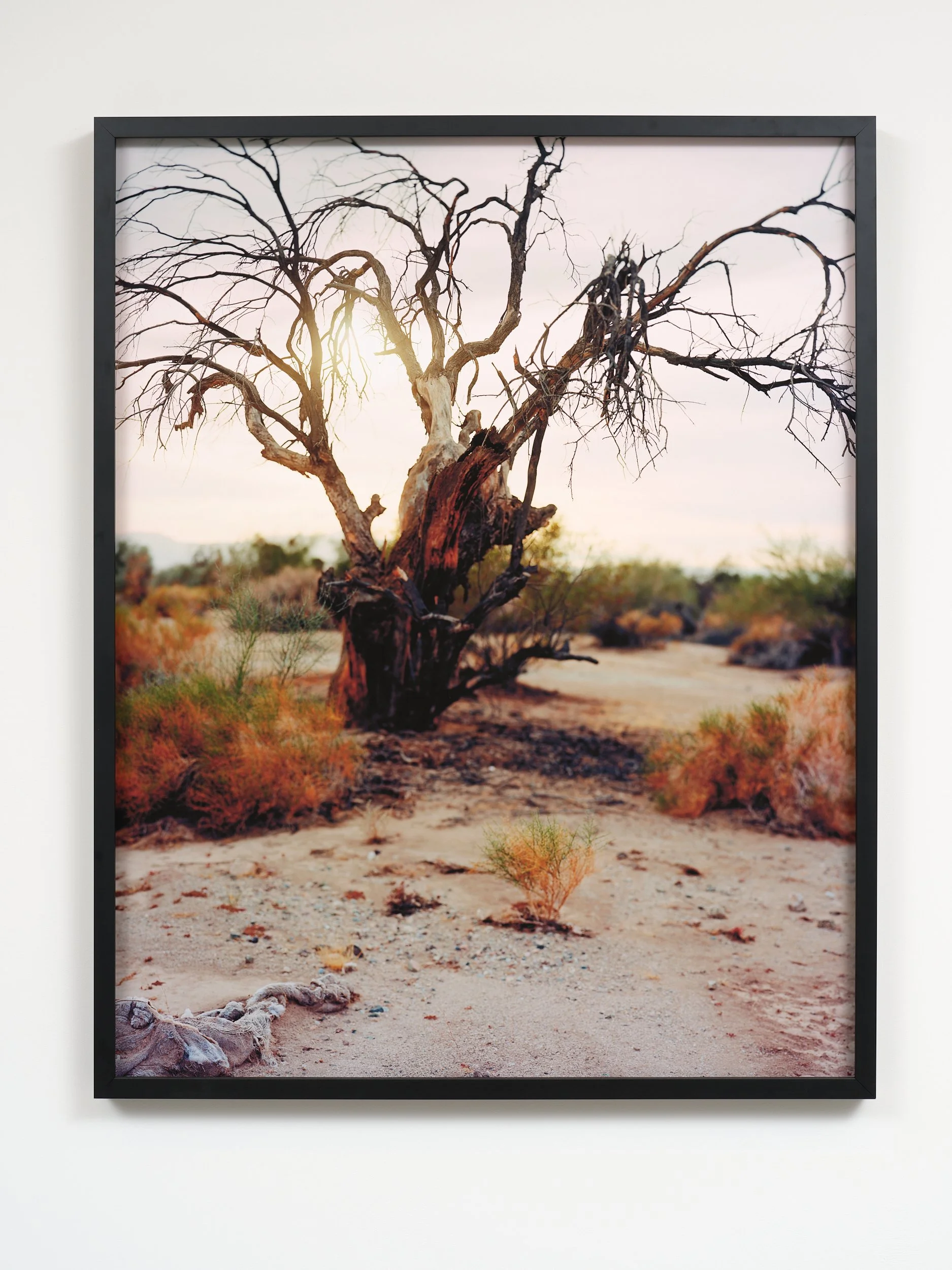
Joyce Campbell, Dawn, 2014
When I first saw Conor Clarke’s photographs of coal-fired power stations in 2014, I found them captivating – billowing plumes of smoke belched from industrial chimneys and merged seamlessly with atmospheric clouds to create dramatic skyscapes. My romantic reading of this series was enhanced by the exclusion of contextual clues, and the way these images lull us into seeing cloud formations as natural phenomena rather than industrial waste. The orange glow of daybreak or sunset simmering in the background of Duisburg-Walsum, Nordrhein-Westfalen reinforces the sense of ambiguity. Yet, I now know that the power station documented in Niederaussem, Rhein-Erft-Kreis, Nordrhein-Westfalen was estimated in 2018 to be among the ten most carbon-polluting coal-fired power stations in the world.1 I don’t remember being horrified by these photographs in the way that I am now – more than a decade later. As American photographer Richard Misrach wrote in his book Richard Misrach On Landscape and Meaning: great beauty and great horror can co-exist in a single image. 2
Clarke took this series during her artist’s residency in Berlin, and it whakapapas back to influential Dusseldorf School of photography founders Bernd and Hilla Becher, who began their extensive typologies of industrial architecture in the nineteen fifties. Another art historical association is German artist Caspar David Friedrich, whose awe-inspiring landscape paintings are emblematic of the Romantic movement of the early ninteteenth century.
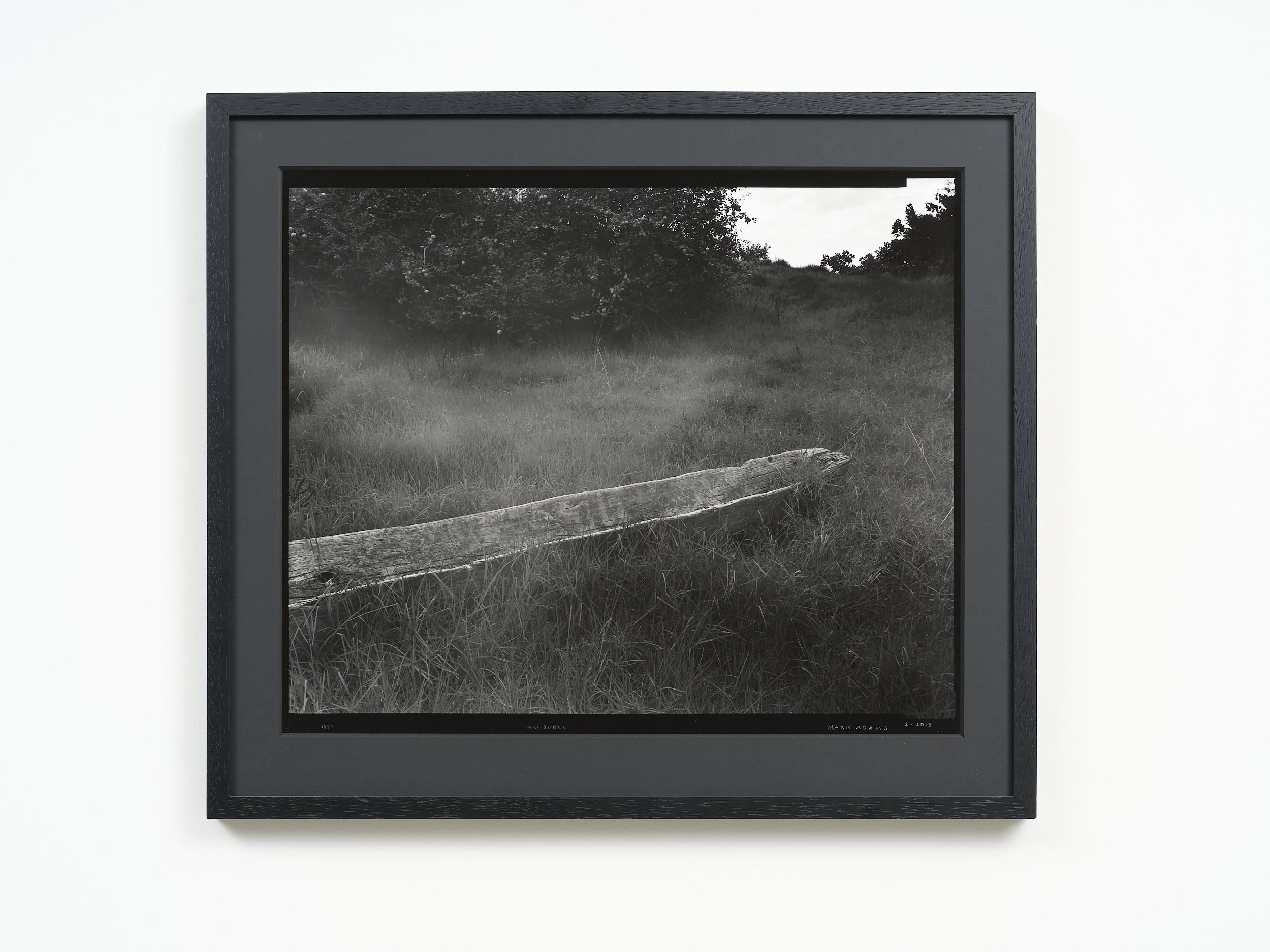
Mark Adams, 1997. Mangungu Wesleyan Mission. Hokianga Harbour, 2013
Megan Jenkinson’s spectacular lenticular photograph Atmospheric Optics 1 can also be read through a romantic lens, with its emphasis on imagination, subjectivity and human perceptions of nature. The work results from her Antarctic Artist’s Fellowship in 2005 when she became interested in the chimerical beauty of dancing columns of light, known as auroras, which are created by Antarctica’s freezing temperatures and low humidity. Jenkinson has imagined auroras as shimmering swathes of fabric suspended above the eerie landscape of Antarctica’s Dry Valleys. This work belongs to a series made using digital photography, Photoshop and prismatic plastic lenses to create a lenticular effect, causing the image to flicker and flare as you move past it. When I first encountered these photographs in 2007, I was struck by their cinematic quality and visual trickery; their celebration of the otherworldly nature of the continent and its atmospheric marvels. Now, with my growing awareness of rapid shrinkage occurring on the Antarctic Ice Sheet, and the implications of this for Earth’s climate, it’s hard not to feel a sense of loss saturating this photograph.
The poetic title – Dawn – which Joyce Campbell gave her photographs of a desert landscape just south of California’s Joshua Tree National Park seems incongruous for this bleak site. The images are dominated by twisted, blackened trees struggling to survive the parasitic mistletoe that grows on them, and the assaults of the humans who frequent the area. Among the trees are traces of human detritus washed down by the heavy rains that occasionally flood the desert basin, transforming it into a raging torrent as water runs off the surrounding mountains.
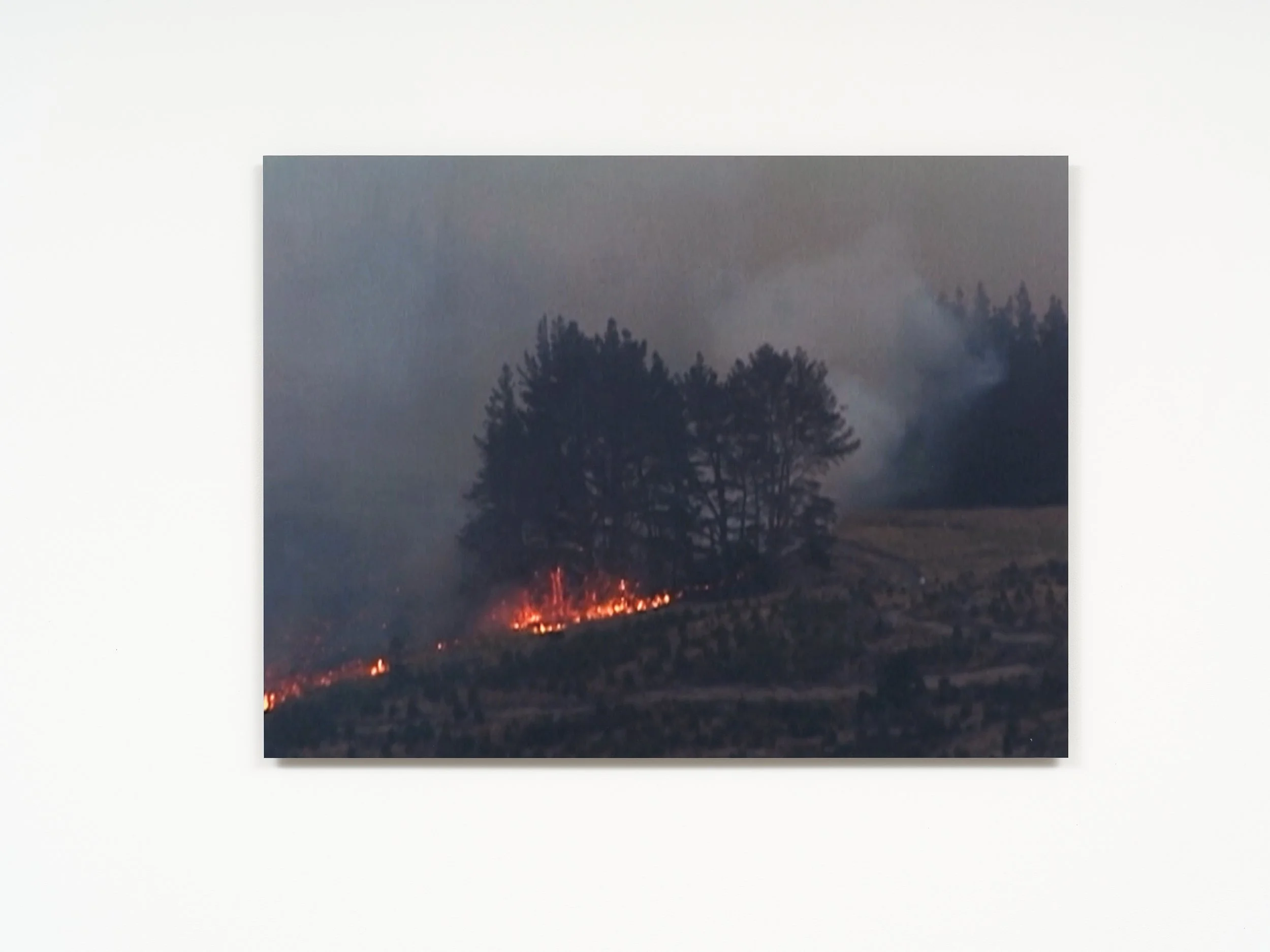
Sam Norton, Untitled 3, 2025
Campbell arrived at the site, which is administered by the United States Bureau of Land Management, after one such flood and has described the space as utterly marginal – a land occupied by itinerant recreational vehicle owners, boy racers in all-terrain-vehicles, and gun enthusiasts seeking an open range.3 She returned three days in a row to capture the hopeful, pink light of dawn, and instead of using a horizontal format to emphasise the expansive desert horizon, she chose a vertical format and a narrow depth of field to emphasise the sculptural shapes of the trees and the human traces. Here a mangled piece of cloth that looks like a dessicated limb; there a dark hollow that likely gave shelter to a human who was down on their luck.
The interaction between nature and culture in Mark Adams’ work London Missionary Society Church, Savai’i, Samoa is more confronting than in Campbell’s desert photographs. Here, we see the skeletal remains of a church destroyed by lava from the 1905-1911 eruption of Mount Matavanu. Only the walls of the church, where the London Missionary Society established its first Samoan mission on the island of Savai’i in 1830, remain standing. Adams has dedicated much of his practice to photographing early sites of European exploration and colonisation in Aotearoa and the Pacific, and this image of a significant colonial site destroyed by natural phenomena brings to mind a different kind of traumatic impact – the cultural damage that Indigenous peoples have suffered as a result of colonisation in the Pacific.
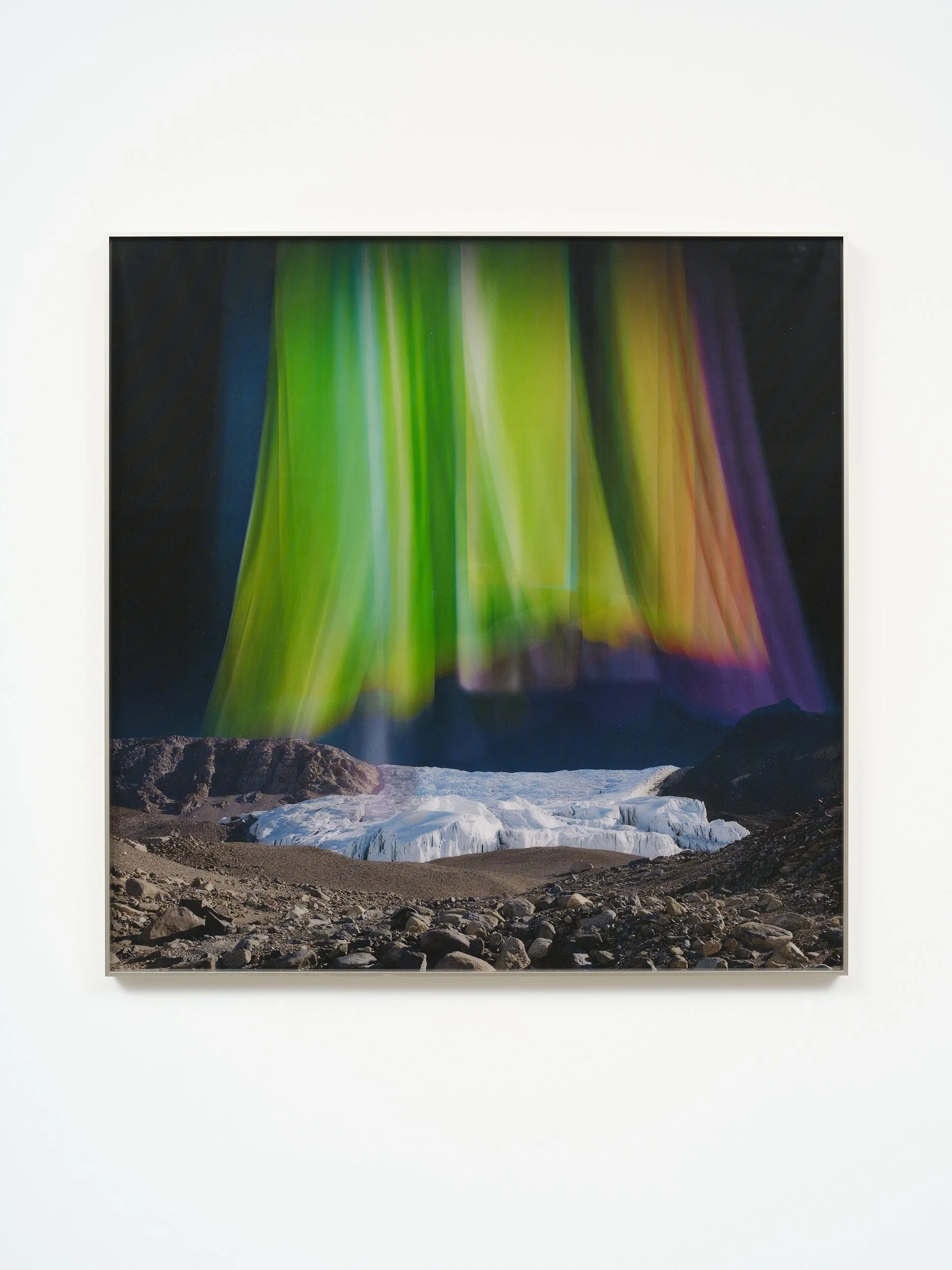
Megan Jenkinson, Atmospheric Optics V, 2007
Sam Norton’s photographs of pine trees consumed by smoke and fire in Christchurch’s Port Hills are more like cinematic tableau than documentary images. Originally made as video footage on a Handycam during the 2017 fires, they’ve been printed as screenshots, which gives them a glitchy, blurred materiality. Rather than being concerned with a specific time and place, Norton took a poetic and open-ended approach to making this series, aiming to create a sense of unease and “a deliberate ambiguity between smoke and mist”.4 These photographs echo our growing awareness of the entanglement of ‘natural’ and anthropogenic forces that are shaping the baffling and often frightening weather we now experience in our daily lives.
Referring to this series, Norton wrote: “We live in such a volatile, complex and disturbing time, one that is simultaneously interconnected and dislocated, aware and in denial, all the while hurtling towards our own destruction...” 5
Like the humans who made them, the photographs in this exhibition are never fixed; they’re in a constant state of becoming, reflecting in their fragile surfaces the extreme uncertainty that defines our times.
References
1) “Niederaussem Power Station”, Wikipedia, accessed 8 March, 2026, https://en.wikipedia.org/wiki/Niederaussem_Power_Station
2) Richard Misrach on Landscape and Meaning, aperture
3) “Joyce Campbell, To The Wash”, Two Rooms website, accessed 7 March, 2026, https://tworooms.co.nz/exhibitions/to-the-wash/
4) “Vision Thing”, Sam Norton interview by Jane Wallace, Bulletin, Christchurch Art Gallery, Te Puna o Waiwhetū
(5) Ibid.
Virginia Were’s essay was commissioned to accompany the exhibition The Inevitable: Mark Adams, Joyce Campbell, Conor Clarke, Megan Jenkinson and Sam Norton at Two Rooms.
All photographs of the works in situ by Sam Hartnett
The exhibition ran from 13 March - 11 April 2026.