
i am an old phenomenon
Ann Shelton
Essay by Waverley Taylor
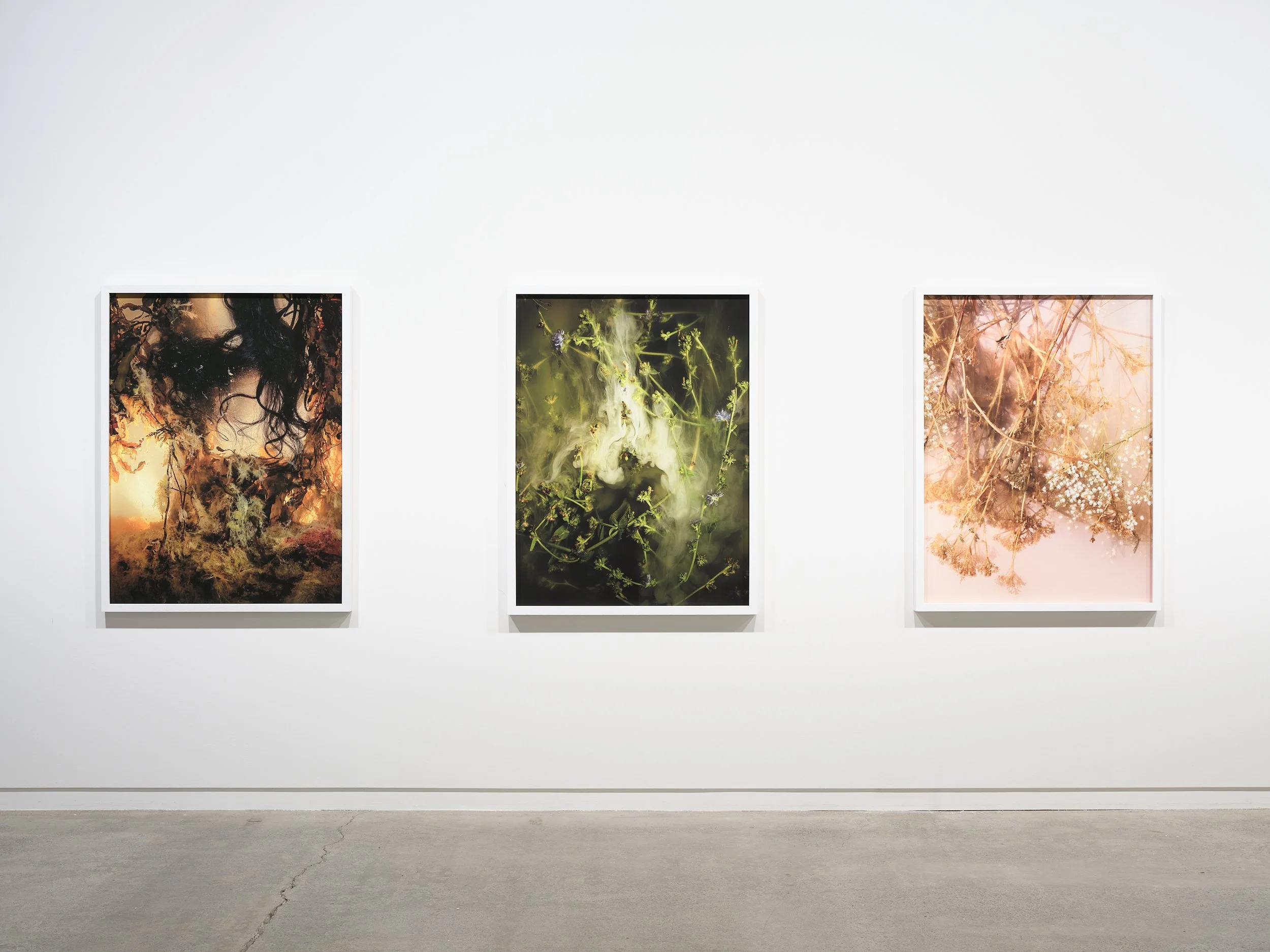
Ann Shelton, i am an old phenomenon, (installation detail, Two Rooms Gallery) , 2026
Nasturtium flowers grow along a rock wall at the back of my house. After it rains, their round leaves are covered in beads of water that sit like pearls in green oyster shells, catching and refracting the light. If you gently shake the leaves, each droplet rolls and bounces like a plump, barely set panna cotta. Above the rambling nasturtiums grows an angel’s trumpet with flowers that hang like big pink bells. A kawakawa bush stands beneath them, leaning over the pathway so that its waxy leaves brush the bodies that walk past. Over the path looms a magnolia tree and through its branches spreads a vine with white flowers whose pollen permeates the air.
The shared building my house sits within is encircled by plants. It is a tangled, intuitive, emergent garden; a patchwork of foliage that evades coherence. The gardens I worked in as a professional gardener were different: these spaces were often austere and manicured, treated as outgrowths of immaculate interiors. The hedge, garden border, and topiarised shrub might maintain an illusory sense of order, but they are futile attempts to stifle what is always in flux.
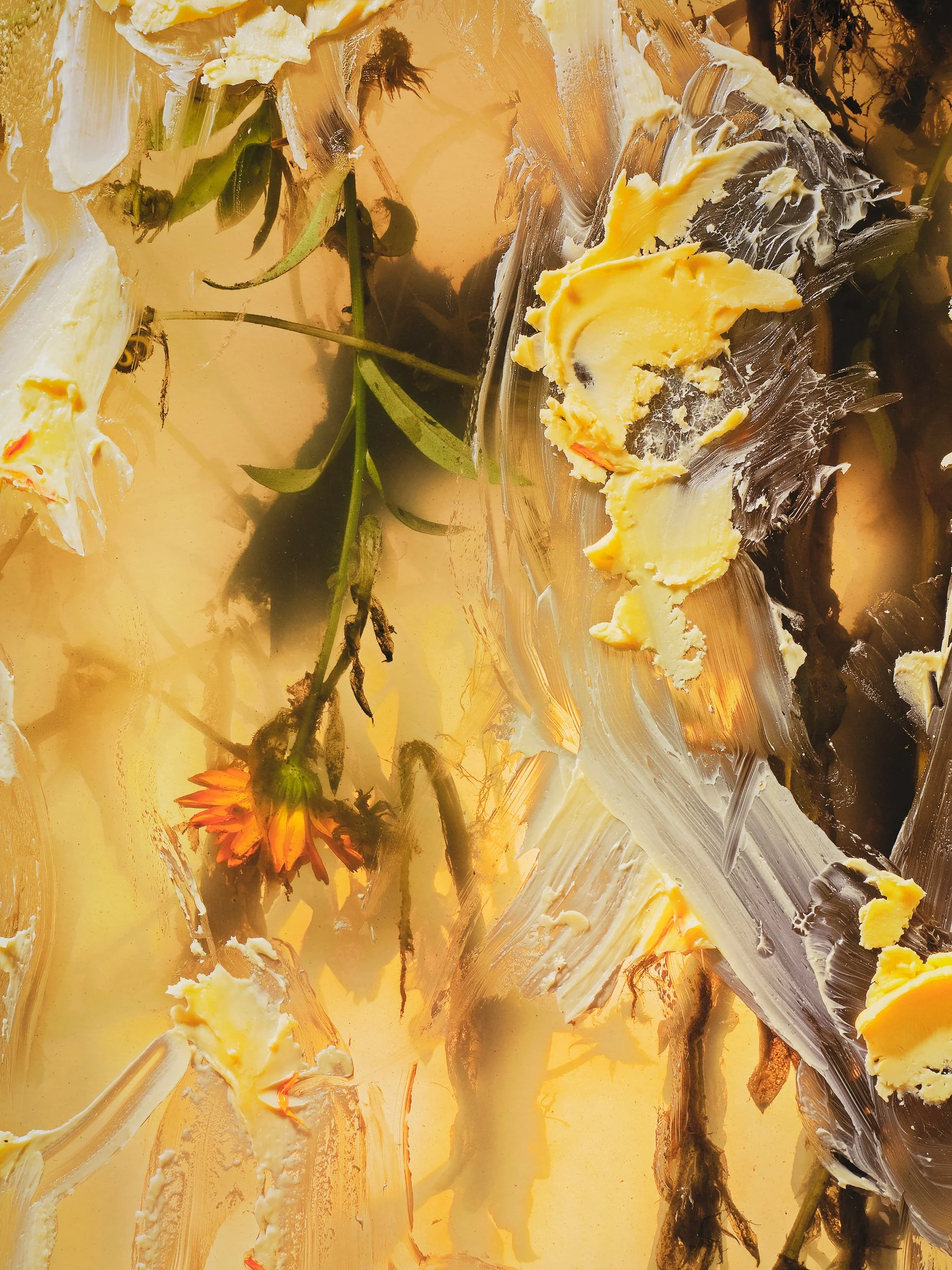
Ann Shelton, All the hours of the day (calendula, marigold, pot marigold, marsh marigold, marygold, mary and gold, mary-budde, fleur-de-marie, oculus christi, fiore d’ogni
mese, golde, golds, ruddes, solis sponsa, solsequia, poor man’s saffron), 2023.
A garden is a cultivated stage where we enact our desire for control over nature. Why do we try to contain what is wild and unruly? Plants are messy and we are at their mercy. They have their own laws and movements, operating within an intricate web of variables. Even when we study their growth patterns, preferences for light and water, they wilt, change colour, shed leaves, rot, dry up; they sprout, flower, unfurl, and expand. Plants boldly reveal their fragility, dramatising the relentless cycles of growth and decay that govern them. They remind us of our own oscillating, mortal bodies; that we never exist in wholeness, but within the edges of transition and partial synthesis.
i am an old phenomenon yields to this liminality. Each image renders a plant in motion and reaction. They burn, rot, float, and sink; they are wet, submerged, and carnal. These plants contain histories of medicinal, cosmetic, or spiritual use. Over time, these histories have been fragmented by colonisation, capitalism, and the devaluing of folkloric and indigenous knowledge. The series’ title gestures towards an animate world where plants have an ancient and collective cognisance. Some herbalists believe that the visual aspects of plants reveal their uses, suggesting a willingness to enter and imprint upon our lives.
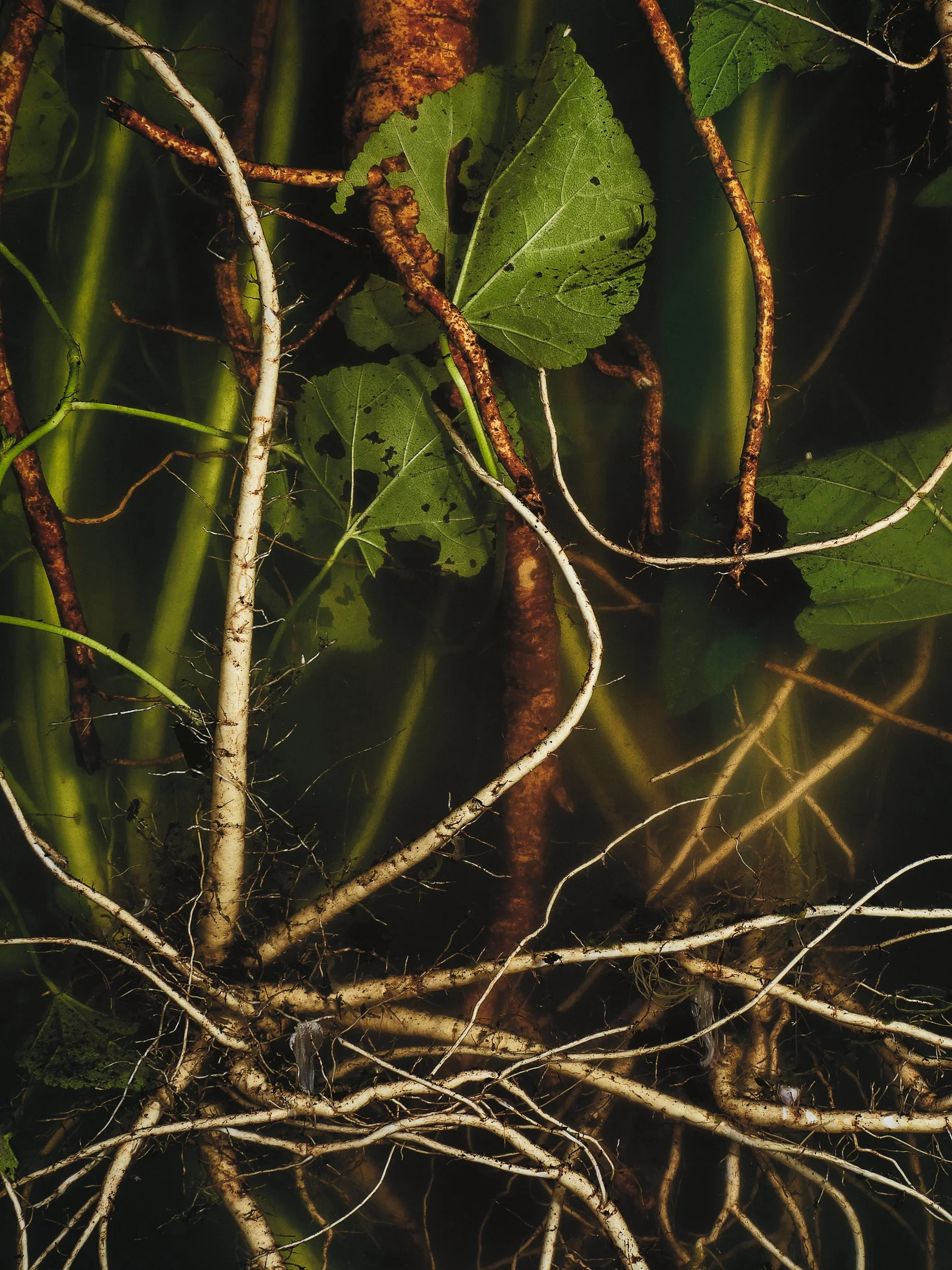
Ann Shelton, A healer’s name, (marshmallow, sweet weed, mallow, mallards, mauls, ketmia, schloss tea, cheeses, mortification root, white mallow, altheia), 2025
Every morning I rub calendula-infused oil on my face; sometimes I swish it around in my mouth. Its bitter taste contradicts its sunny hue. Plants act on us: they stain, intoxicate, soothe, inflame, and alter our bodies. i am an old phenomenon evokes the permeable boundaries between plant and human worlds. In All the hours of the day..., calendula flowers sit in a water-tank smeared with butter, recalling their historic use in balms for healing skin. The butter is aggressively applied, forming a thick, uneven skin across the image that both obscures and reveals the flowers that rot beneath it. Pale yellow fat sits against decomposing plant matter, creating an image that is both seductive and putrid.
All the tears... presents another plant associated with skin and affliction. The name of these flowers comes from the Latin scabere, to scratch; historically they were used as a remedy for skin diseases and infectious wounds. These delicate blooms, the colour of blackberries or bruises, have an unsettling presence. There is an artificiality to their placement: as they reach horizontally across the image, their thin stems become animate, menacing ropes that might strangle the naked figure lying behind them.
A sense of invasive growth and contagion haunts the image. The tension here lies not between beauty and disease, but between plant and body. The flowers act as a screen between the world of image and viewer, either shielding the bare, lambent body or trapping it.
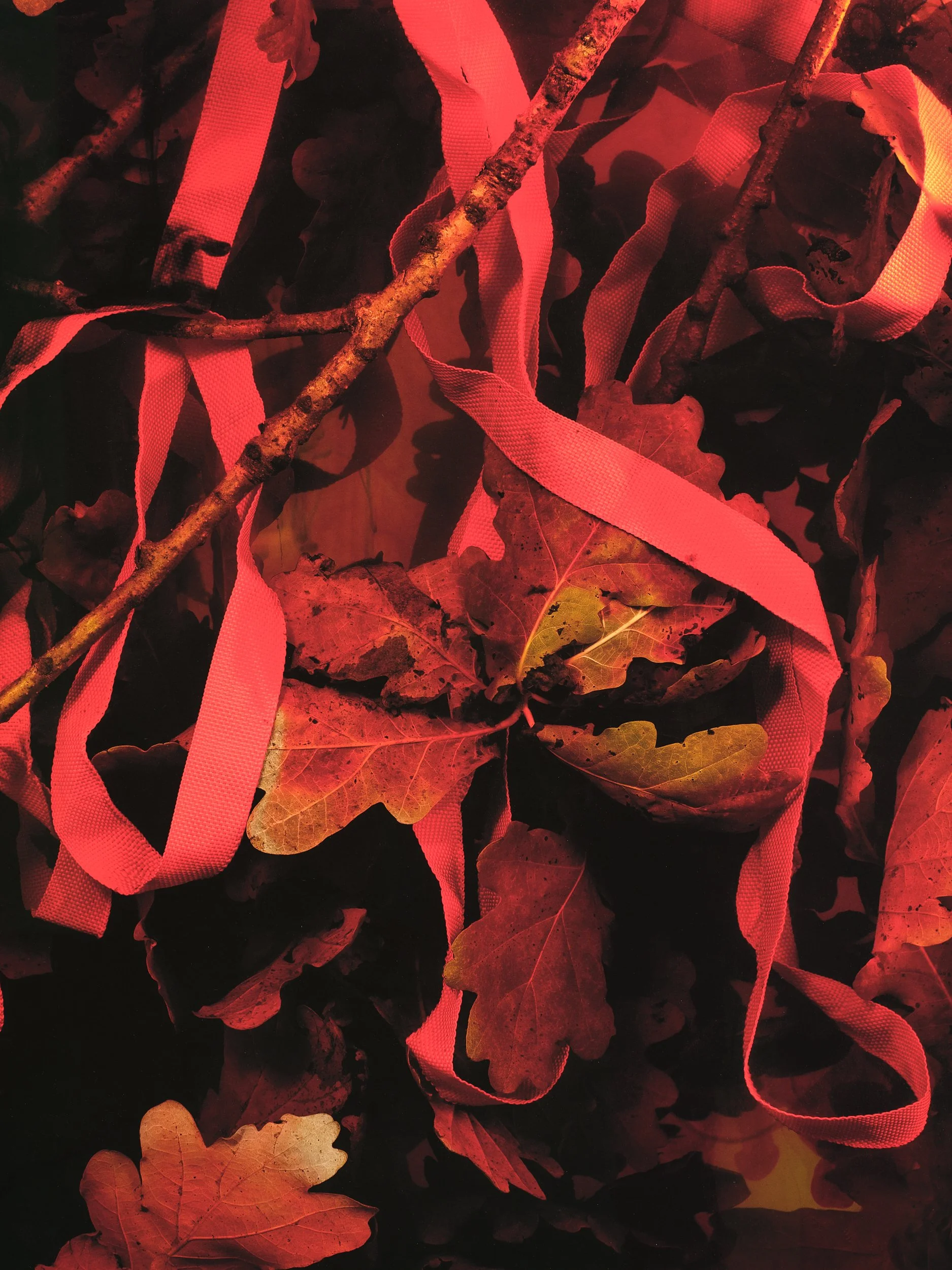
Ann Shelton, Fatal walk (oak), 2026
In Hanging in water..., hair is a connective fibre between imagined human skin and real plant matter, suggesting a body subsumed into its environment. Hair and seaweed fuse to form furry, knotted, creaturely clumps. The swirl of hair falling from the top of the frame recalls a siren or a drowned witch — figures that represent the perceived threat of female knowledge, desire, and power: hair becomes a snare, a pool to be drowned in. These tendrils are echoed by the red ribbon that ripples across the centre of Fatal walk... like a wound — a reminder that people once wrapped their enemies' intestines around the trunks of oak trees: a bloodthirsty iteration of ecological unity.
Because of the generous scale of these images, their alluring contrasts of light and colour, and clarity of detail, these plants feel vividly present. Yet despite this somatic intimacy, they remain veiled. Water recurs as a site of submergence that renders them unable to be picked, trimmed, or consumed. In All the blue flowers follow the sun..., chicory is enfolded in a milky cloud, and in Bruised and burned..., vervain is obscured by a hallucinatory flame. The more we sense our entangled relationships with these plants, the more estranged they appear.
Our relationships with plants oscillate between entanglement and separation. We have long treated them as specimens to be collected, classified, and named. Photography is deeply entwined with these imperial systems of ordering and display. What happens when we transform embodied knowledge and living matter into a fixed image? What becomes aestheticised in this process?
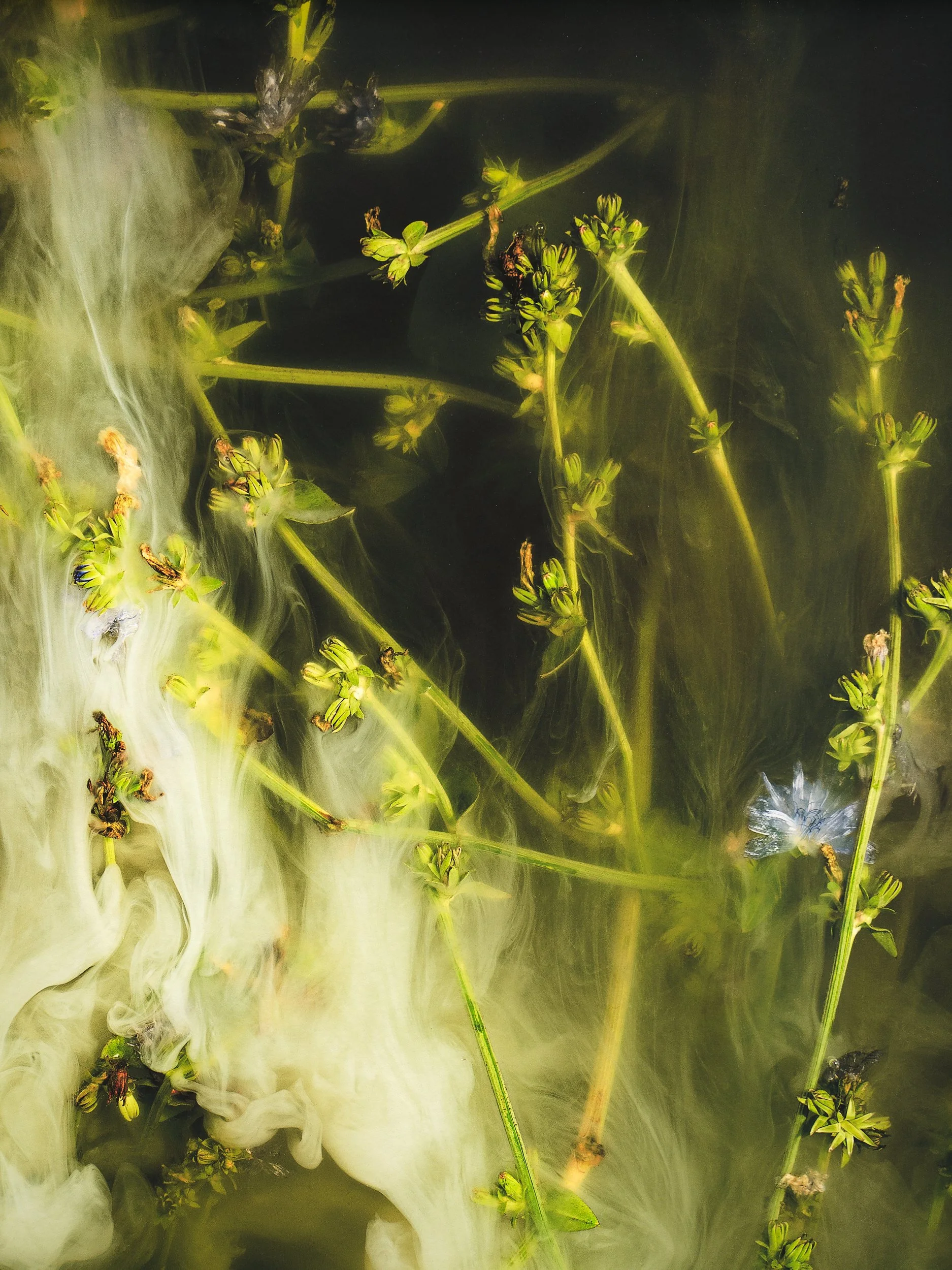
Ann Shelton, All the blue flowers follow the sun, part 1 (chicory, succory, blue sailors, coffee- weed, wild succory, blue daisy, blue daisy, blue dandelion, blue sailors, blueweed, bunk, coffeeweed, cornflower, hendibeh, horseweed, ragged sailors, succory, wild bachelor’s buttons, and wild endive), 2025
But Ann’s photographs resist this containment. Plants expand beyond their frames, occupying unbounded, indeterminate spaces untethered from geography and taxonomy. Leaves, branches, and stems propagate, spreading diffusely without a linear trajectory of growth from soil. Their rootlessness is not abstraction, but rewilding: an affirmation of their migrations across time, culture and place.
The titles extend this expansiveness. Each work begins with an evocative phrase or fragment, followed by a bracketed series of folkloric names. Ann continues to add new names as they emerge. This relational practice of naming stands in contrast to Linnaean taxonomy, which situates plants within a biological hierarchy based on shared physical characteristics. Ann’s titles instead reveal a palimpsest of encounters between plants and humans; naming becomes less an act of classification than a way of tracing relationships. As these titles accrete, they form a rhizomatic archive in which the sediment of histories and associations around each plant remains shifting, accumulative, and incomplete.
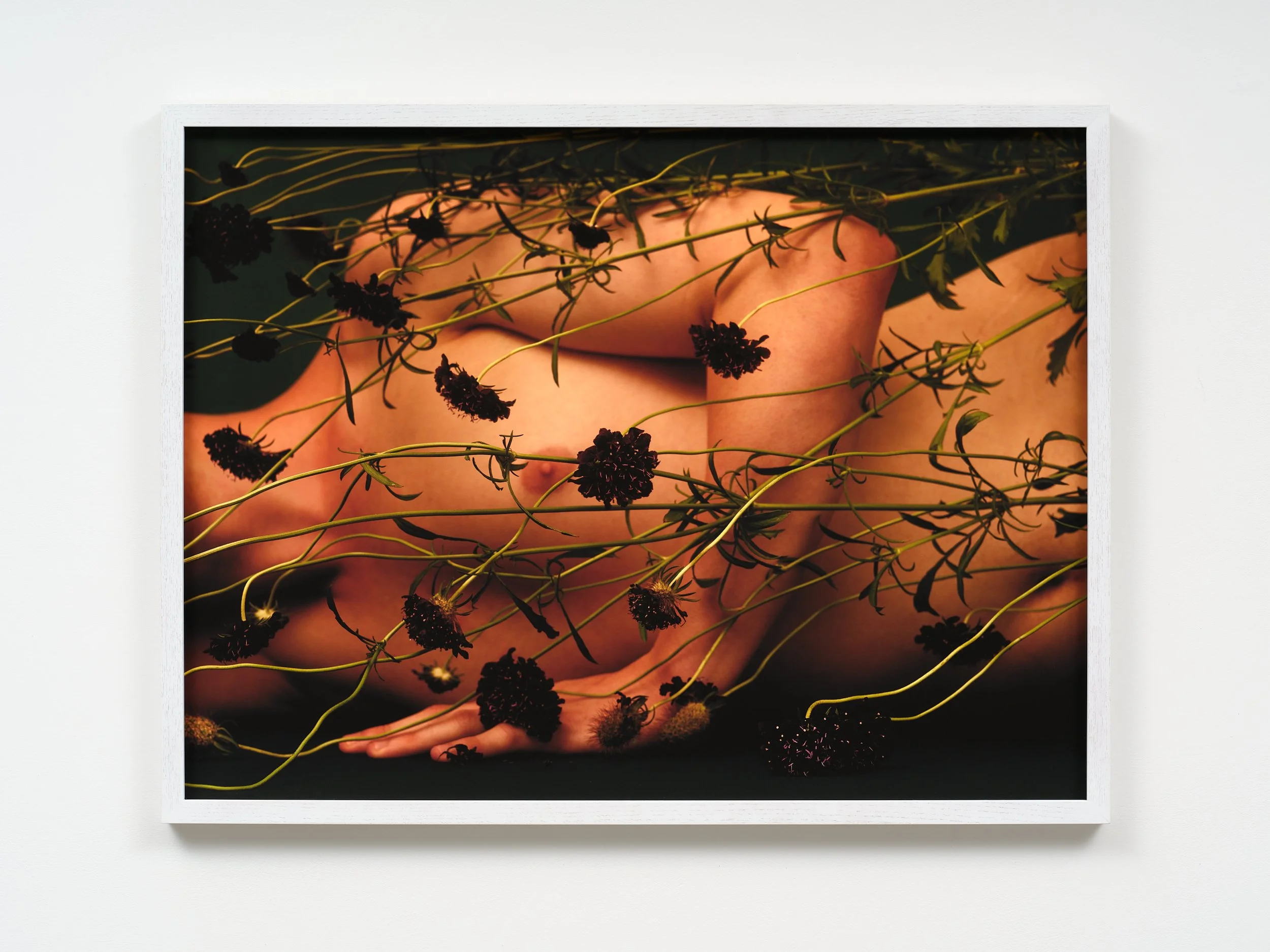
Ann Shelton, All the tears, (scabiosa, black knight, pincushion flower, sweet scabious, black scabious, mourning bride, mournful widow, blackmoor’s beauty), 2026
Waverley Taylor’s essay was commissioned to accompany the exhibition I am an old phenomenon by Ann Shelton at Two Rooms Gallery.
The exhibition runs from 5 June - 11 July 2026.