
New Zealand Photography Collected: 175 Years of Photography in Aotearoa
New Zealand Photography Collected: 175 Years of Photography in Aotearoa by Athol McCredie Review by Theo Macdonald
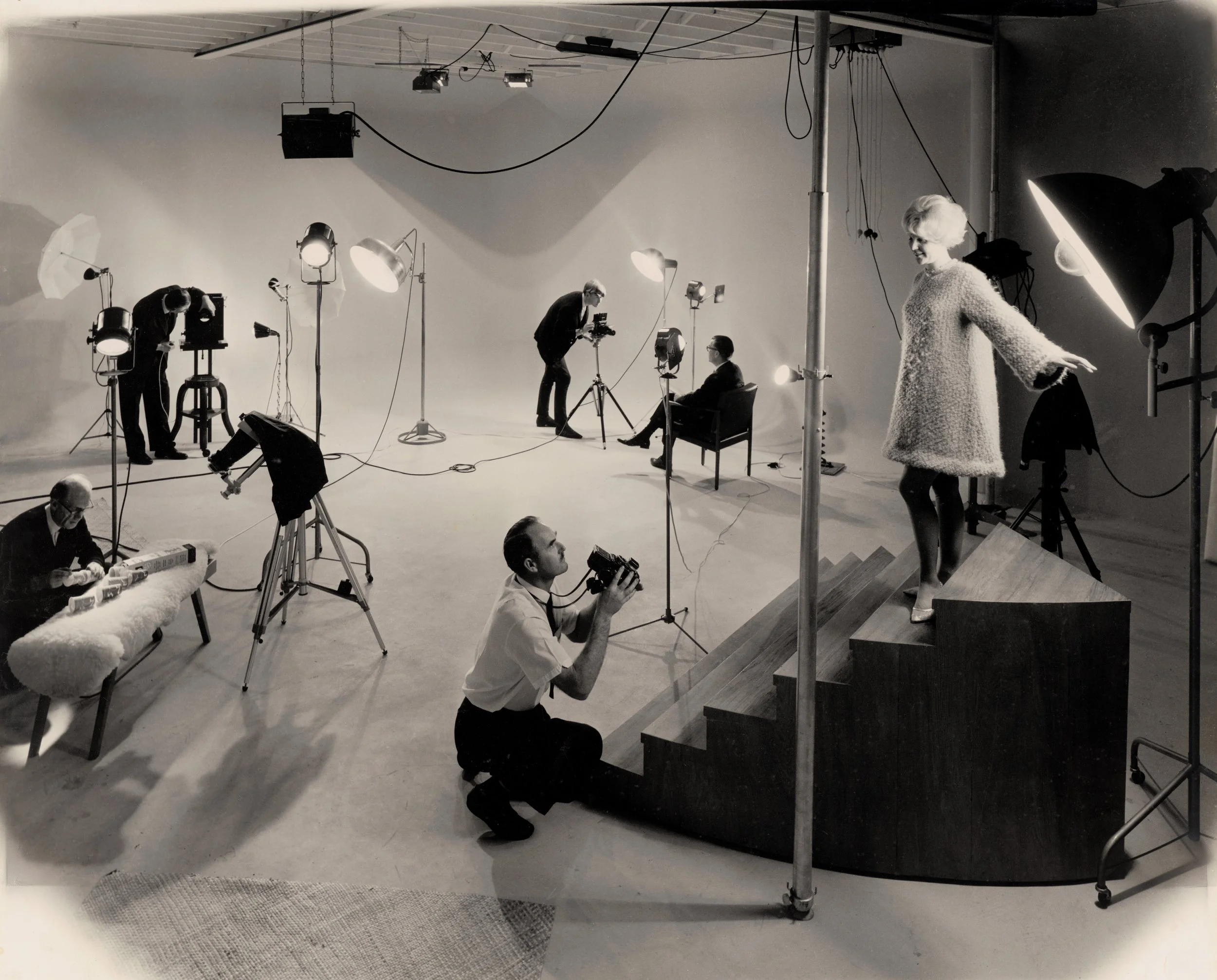
Frank Hofmann, Christopher Bede Studios, 1967
Gelatin silver print, 418 × 578 mm (Purchased 2016, O.044647)
Athol McCredie’s New Zealand Photography Collected selects 344 feature images from the nearly 400,000 photographs held by Te Papa Tongarewa. Spanning 1850 to 2025, the book organizes these images into seven loosely chronological, thematic chapters, encompassing portraiture and landscape photography (natch), pictorialism, industrial, commercial, and scientific applications of the medium, the new documentarians, and recent examples of contemporary art photography.
The aim of this volume—and of its immensely popular 2015 predecessor, substantially revised here—is to tell the story of photography in Aotearoa New Zealand, rather than the story of Aotearoa itself. “Histories about photography,” writes McCredie, paraphrasing art historian Geoffrey Batchen, “deal with questions of production, reproduction, dissemination, and collection. They consider not only how photographs operate in their time but also how they operate through time.”
What distinguishes McCredie’s approach—closely attentive to the photographic dispositif—is its pluralism: the chaining together of commercial, industrial, institutional, and personal photographies—namely, all photography
In recent years, a backwards gaze has defined our national photographic discourse. Publications such as Catherine Hammond and Shaun Higgins’ A Different Light: First Photographs of Aotearoa and Nature Boy: The Photography of Olaf Petersen, Lissa Mitchell’s Through Shaded Glass: Women and photography in Aotearoa New Zealand 1860–1960, and Paul Moon’s Ans Westra: A Life in Photography, have revisited the myriad traditions represented in New Zealand Photography Collected. Galleries and museums have surveyed decades-old work by Gil Hanly, John Miller, and Robin Morrison, while artists such as Camus Wyatt, Timothy Webby, and Stella Brennan produce new works from inherited negatives.
In concord with this trend, McCredie presents his book as “a new way of thinking about photography in Aotearoa.” What distinguishes McCredie’s approach—closely attentive to the photographic dispositif—is its pluralism: the chaining together of commercial, industrial, institutional, and personal photographies—namely, all photography—rather than their separation by genre. This concern with circulation and distribution emerges most clearly in his inclusion of images that would not originally have been seen in their own time, or in the form we encounter them here: studio outtakes, full-frame negatives, and daguerreotypes scanned to eliminate their distinctive mirror finish.
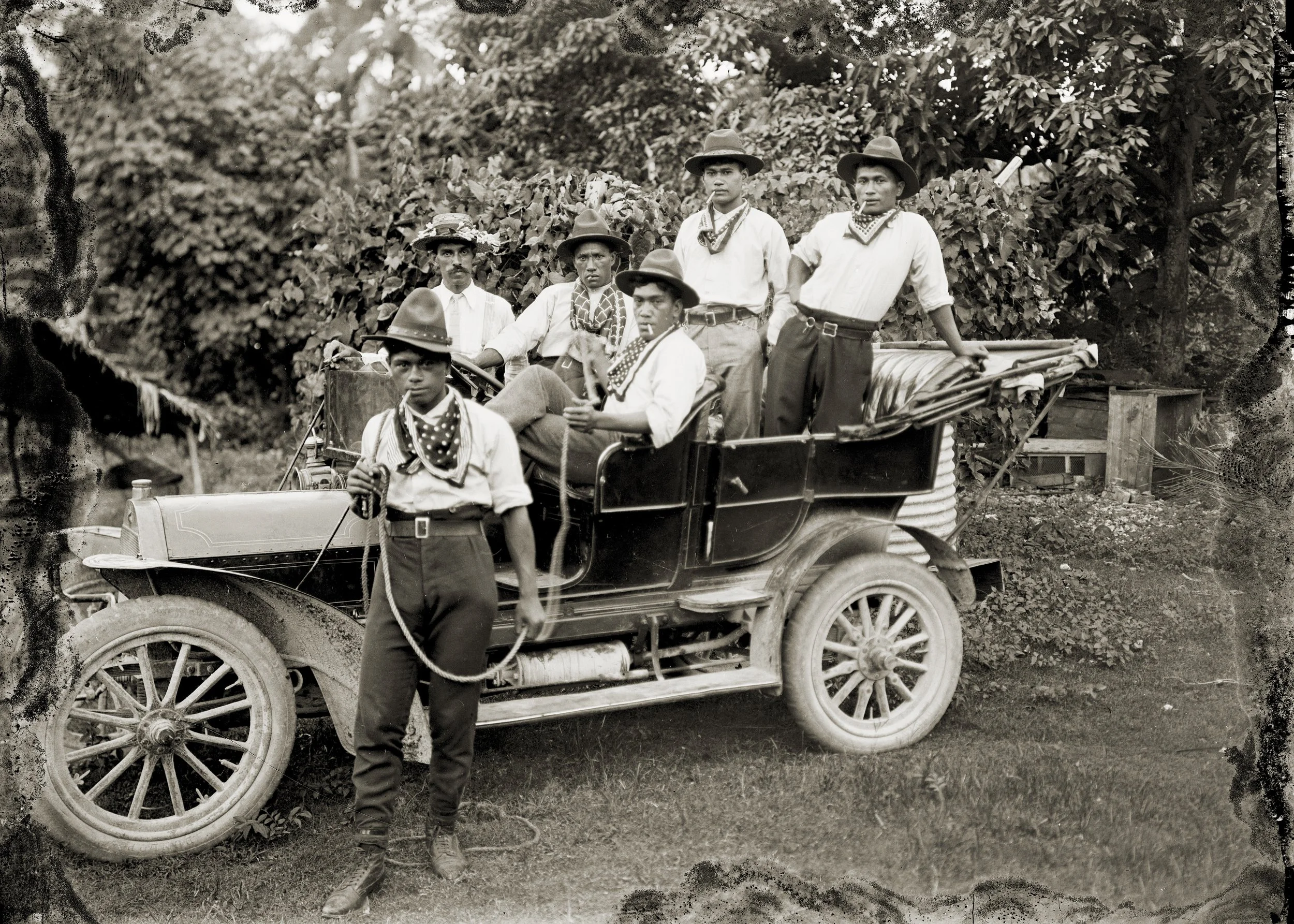
George Crummer, Cook Islands’ cowboys, c.1914
Gelatin glass negative, half plate (B.027699)
That said, readers familiar with the previously mentioned volumes may not find much entirely new here. McCredie writes in the introduction, “I picture New Zealand Photography Collected as a container that, from the outside, has a defined shape and meaning but which, when opened, releases images that burst from the pages in their diversity, unruliness, and provocations.” For the neophyte—an audience not to be overlooked!—this will surely ring true. The book operates as a chocolate box, offering abundant hazelnut swirls such as a c.1910 nude study in which the female subject’s crotch has been eerily erased in a disturbingly Lynchian gesture; George Crummer’s c.1914 Cook Islands cowboys—about which New Zealand historian Dick Scott notes, “overseas visitors were startled to see roving bands of cowboys in full costume (no Indians) riding through the palms, hitching scrub ponies to the trading store and walking stiff-legged to the counter”; and the Spencer Digby studio’s witchy portraits of feline fanatics at the Wellington Cat Show. More sublime wonders appear in a whole-plate negative of a faletele under construction and Jewish-Austrian refugee Richard Sharell’s expressive compositions of stick insects and flypaper.
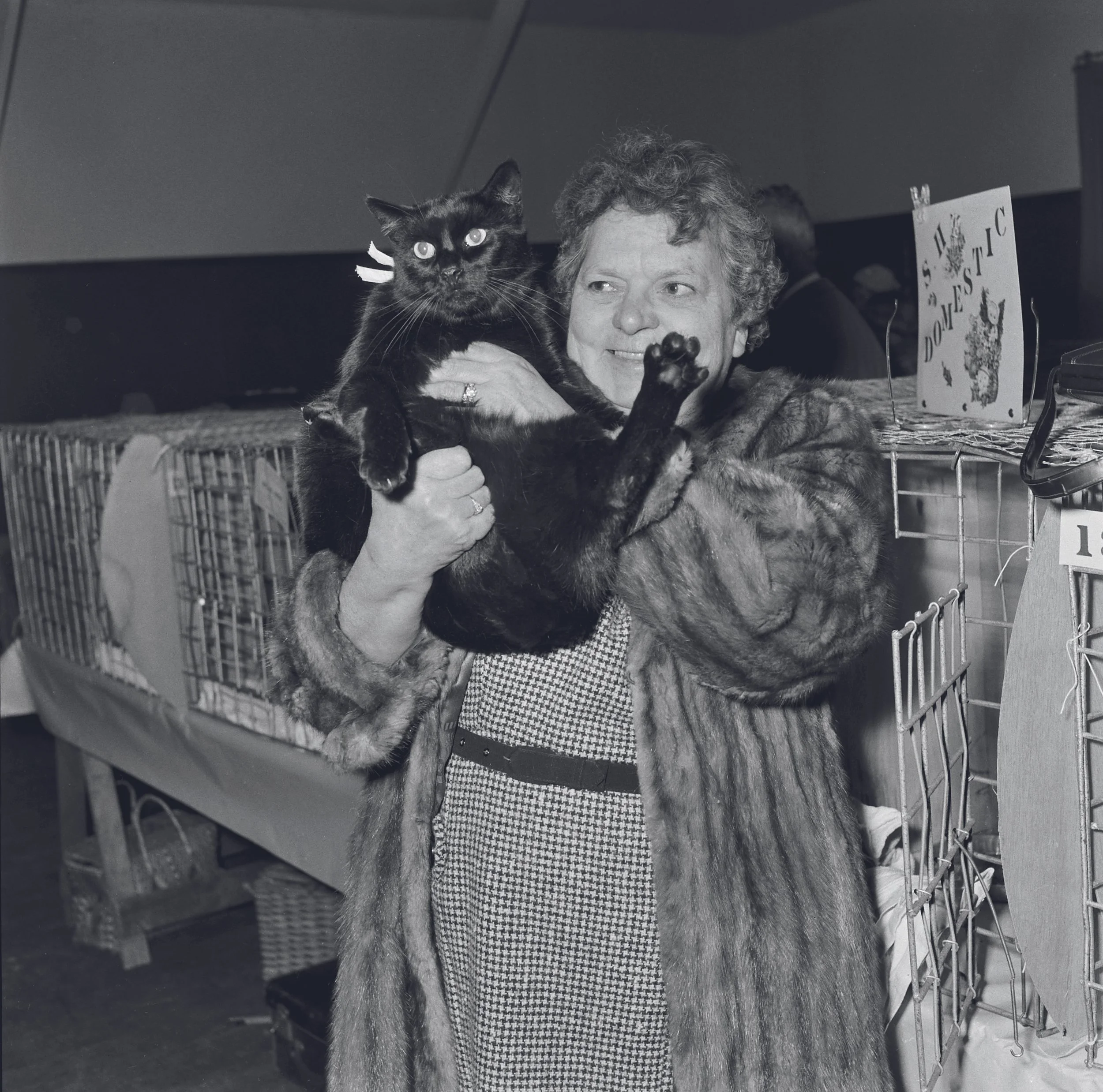
Spencer Digby studio, Wellington Cat Show, 10 June 1961
Roll film negative, 60 × 60 mm
Spencer Digby / Ronald D Woolf Collection. Gift of Ronald Woolf, 1975, F.014897
And yet what is not represented—and what remains most pressing—is the question this raises: what can this book tell us about the state of photography in Aotearoa today, and, more importantly, tomorrow? In continually refining a consensus about what photography here has been, do we risk abandoning hope for a photography to come?[1]
These questions evoke 28 Years Later, the horror film franchise set in a quarantined Britain after a zombie pandemic. In it, the isolated survivor Dr. Ian Kelson spends decades constructing a cathedral from the bones of the dead—a monument to a vanished society he remembers chiefly for its “sense of certainty.” The Bone Temple, he explains to the young protagonist Spike, is a testament to humanity: “Every skull is a set of thoughts. These sockets saw, and these jaws spoke and swallowed. This is a monument to them. A temple.”
New Zealand Photography Collected is Athol McCredie’s Bone Temple, an acknowledgment that “these sockets saw” in the face of an uncertain future. But what follows? Kelson can finish his monument and exit the world; Spike cannot. Too young to remember what came before, he must make something new. Yet how can he attempt to make something living when all around him insist the world has already died? McCredie’s archive, as meticulously curated and compelling as it is, offers a testament to what has been but cannot, by itself, conjure what is yet to come.
In the chapter ‘Other Perspectives,’ McCredie quotes mountaineer and photographer John Pascoe’s frustrated call to arms: “Where are the documentary stories of the gold prospectors, the deer cullers, the growth of a dairy factory, the monotony of wharf labour, the discomfort of a miner’s calling, the adaptation of the Maori worker to city life and environment?” To contemporise this call: where today are the photographs of surgery wards, real estate offices, regulatory debates, and Fonterra junkets? Let alone car crashes, ketamine, sex and violence?
Photographers are indeed documenting these worlds, yet they are largely absent from New Zealand Photography Collected, from Te Papa’s holdings, and from the wider publishing and gallery landscape. And if our institutions continue to valorise and re-interpret the past, overlooking the work being made today, future generations may inherit a photographic record that knows much of what was, but little of what it could become.
[1] McCredie confronts this possibility directly, asking, “If a book like this were made in fifty or a hundred years, using only digital images, what will look similar, and what will have changed?”
New Zealand Photography Collected - 175 Years of Photography in Aotearoa
by Athol McCredie
Published by Te Papa Press, November 2025
392 pages
Hardback, 305 x 250 mm
ISBN: 978-1-99-107207-8