
RANGE
Range: Anne Marie Basquin, Lou Corry, Abbie Cossey, Madeline Jones, Christina Little, Cassey Locke, David Loughlin, Aimee Magne, Charlotte Parallel, Shelley Simpson and Kate van der Drift
Review by Virginia Were
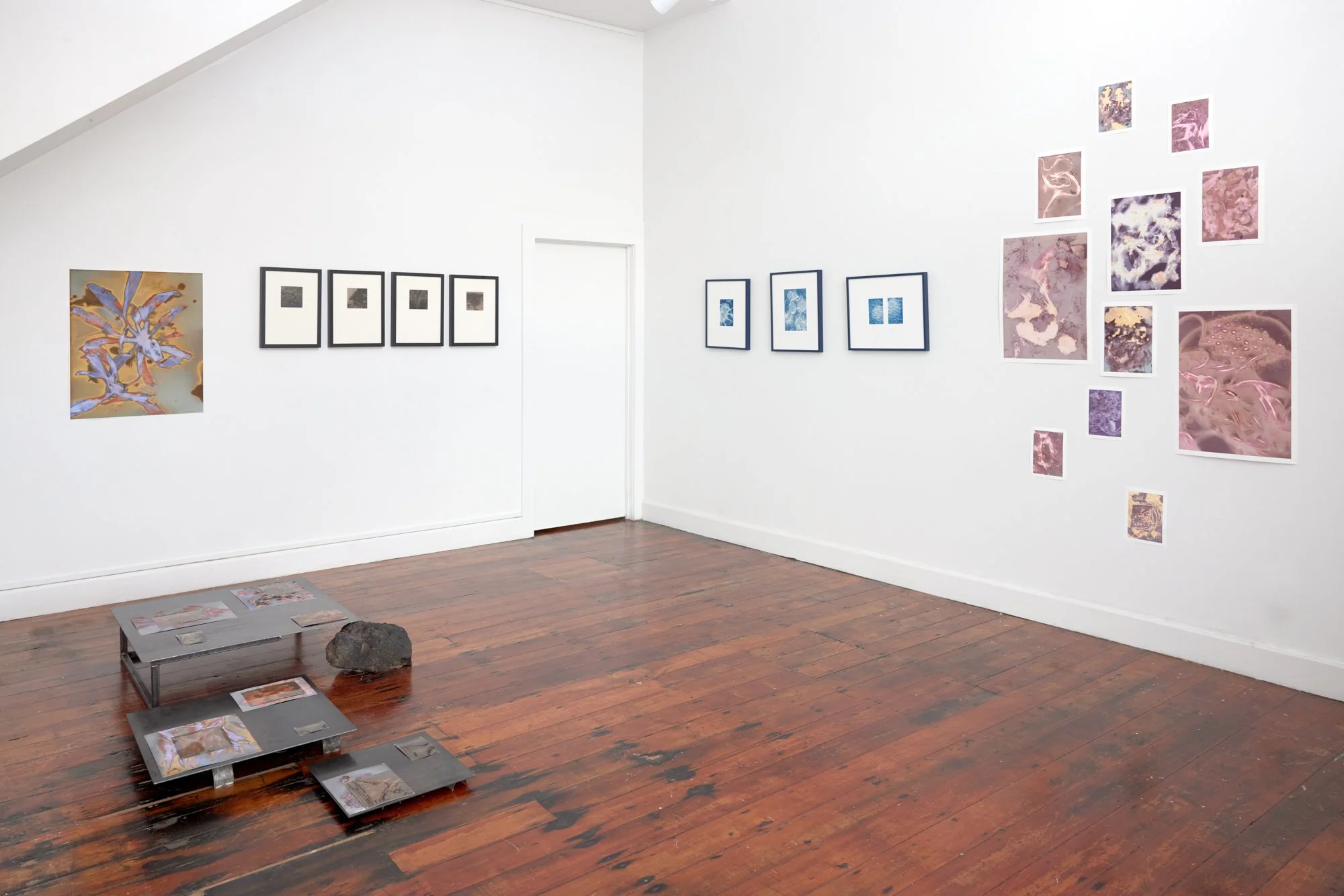
RANGE, Installation view, Eyes on Fire Gallery, 2026
Photo: Kate van der Drift
Unstable images
Virginia Were
A group of eleven artists with a shared curiosity about cameraless photography and a deep engagment with a range of sites and landscapes in Aotearoa came together in June 2026 to present the exhibition RANGE, which was part of Auckland Festival of Photography. The artists met while taking an online course in alternative photography offered by Whāingaroa Raglan-based artist Kate van der Drift whose enthusiam for the medium is sparking a new wave of makers.
Pushing back against the fast-evolving technology of digital photography and its unstoppable tsunami of images, these artists look back to the early history of photography in the 1840s when the process was highly volatile – the chemistry used in developing and fixing images was unpredictable; photographs faded and disappeared over time or bore the phantom traces of their making in the form of streaks, smudges and blots that reinforced their status as handmade objects.
As well as resisting the homogeneity and endless reproducibility of purely digital forms of image making, the artists in RANGE consciously engage with slow ‘human’ rather than machinic time – a radical act in itself. They spend long periods in nature, observing and gathering plants, rocks, soil, insects, feathers and dust, painstakingly setting up situations and processes where these subjects can become collaborators in the image making process. Exposure times in cameraless photography are typically long – minutes rather than seconds. As photographic historian Geoffrey Batchen observed, “...by slowing down the photographic act, many photographs made without a camera also slow down our perception of this act; they ask us to pause a moment and think critically about the consequences of our postindustrial information economy.” (1)
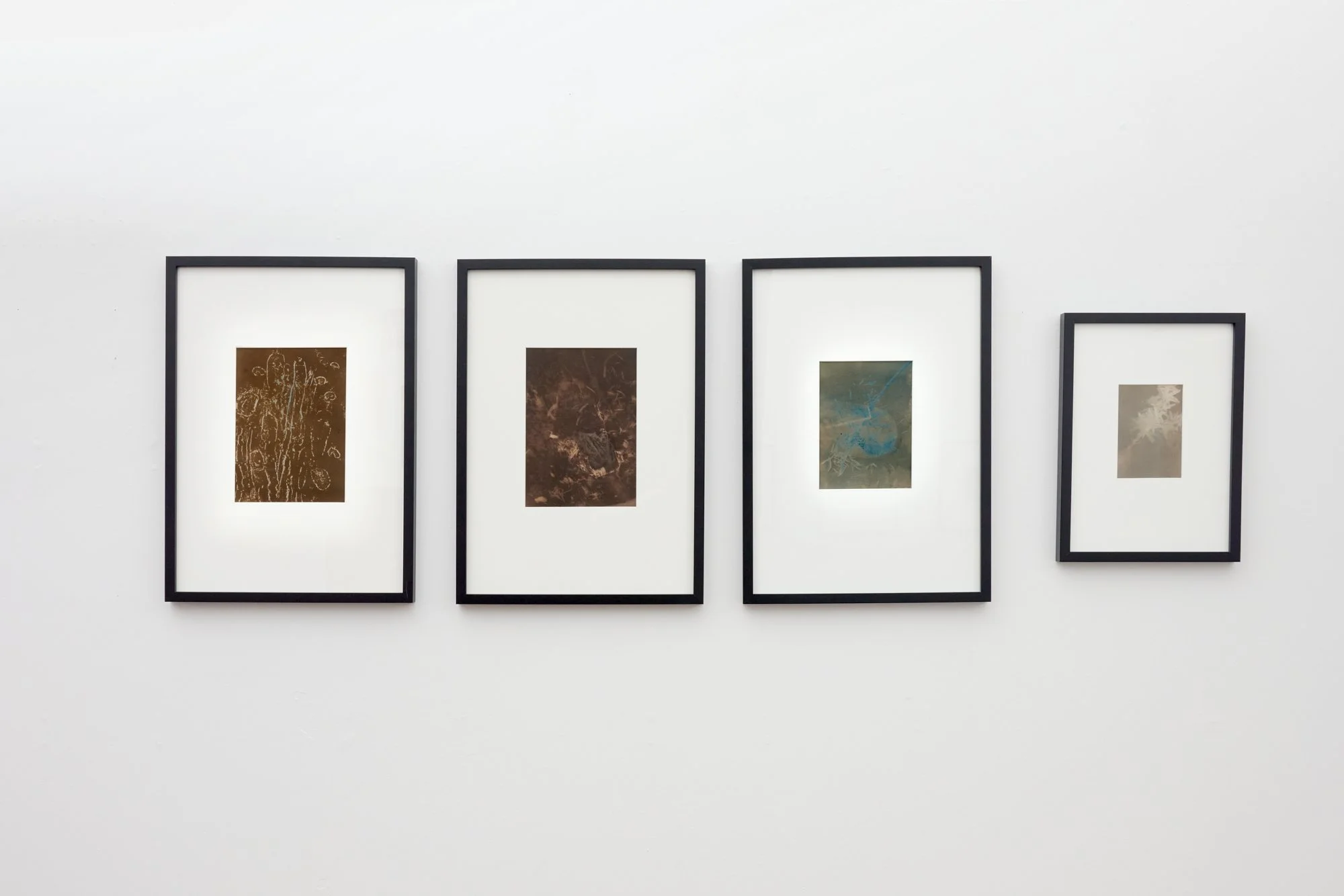
Charlotte Parallel, 2026
In her series of lumen prints “In His Wake”, Lou Corry gathered fronds of seaweed from Te Waipounamu South Island shores, laid them on photographic paper, and exposed them to light to create dusky-toned lumen prints whose billowing forms echo the hypnotic movement of kelp swept by oceanic swells and currents. These prints pay homage to her late father who was an ocean diver, and the titles – Ebbs, Flows, Swirls – emphasise submarine movement. Looking at them is immersive and calming like contemplating constellations in the night sky or the movement of the ocean. If lumen prints are not fixed, they’ll gradually darken and the image will disappear, yet once they’re fixed their colours begin to fade. To retain vibrancy in her work, Corry digitally scanned her exposures and then printed the scans on paper – a strategy also used by Shelley Simpson in her portraits of introduced plants found near her studio at Corban Estate Arts Center in Henderson.
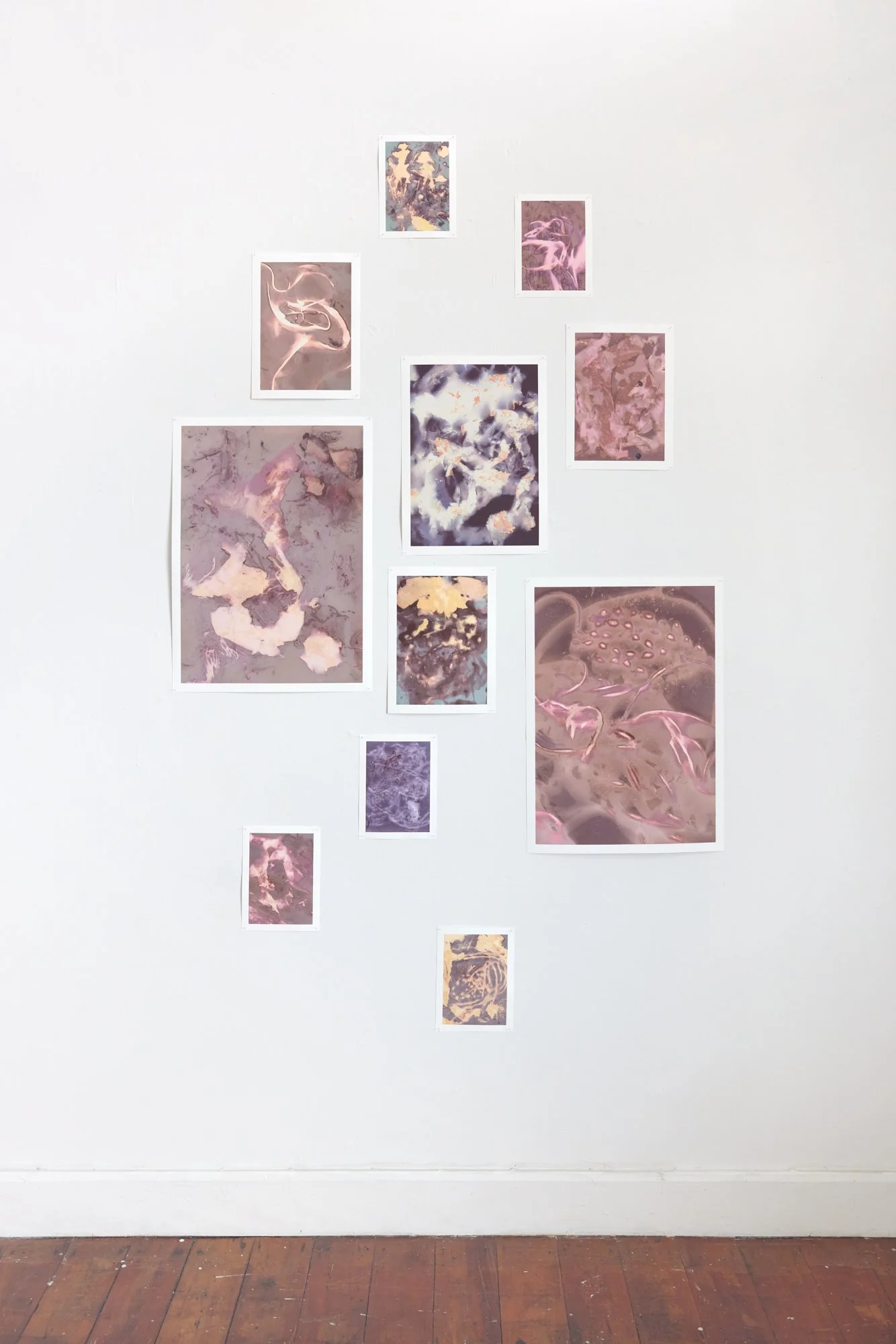
Lou Corry, In his wake, 2026
“the artists in RANGE consciously engage with slow ‘human’ rather than machinic time”
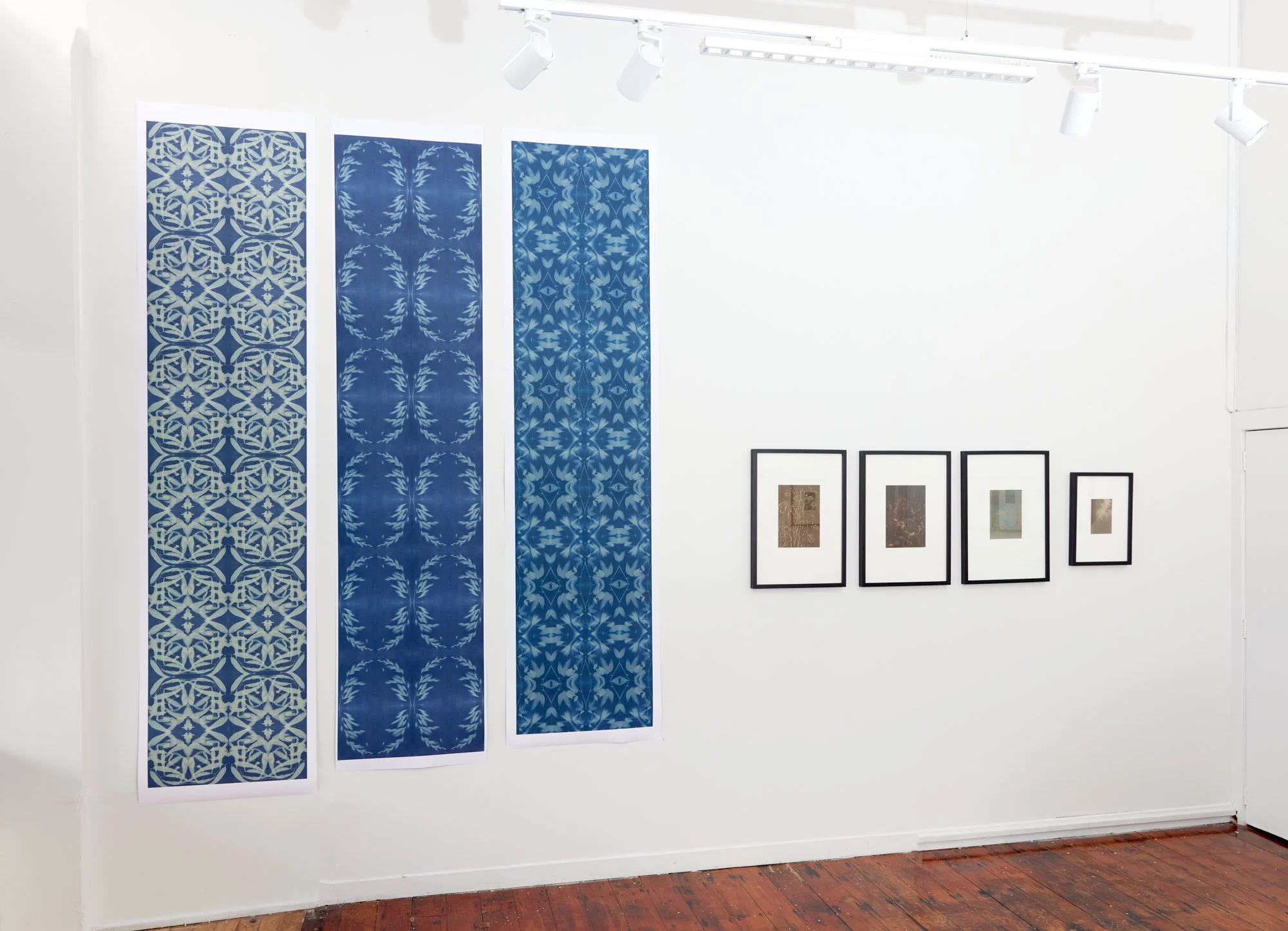
Anne Marie Basquin, 2026 (Left)
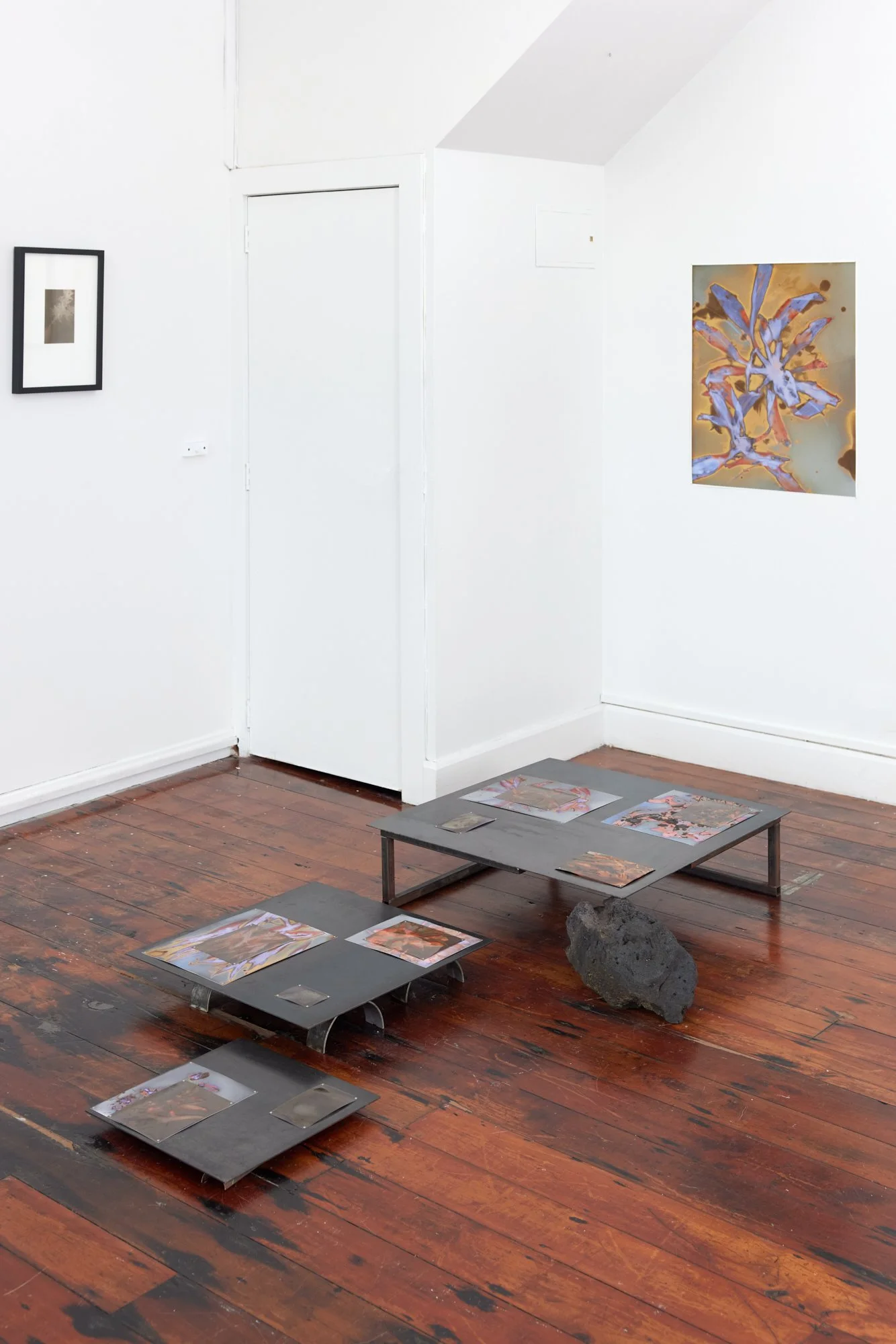
Simpson’s series “Rhizosphere” took root on the gallery floor where lumen prints and the negatives on sheet film she used to make them were arranged on three horizontal steel plates. One of these was propped up by a dense, pitted lump of slag (a waste product resulting from the steel manufacturing process). On the wall above was a startlingly beautiful lumen print with a starburst of soft mauve sparking against a smokey orange and grey background mottled with blobs of rusty brown. The narrow leaf plantain whose portrait we see in this print belongs to a group of plants known as hyperaccumulators, which are capable of growing in soil or water with a high concentration of metals. Hyperaccumulators absorb metal through their roots and store them in their foliage, which means they have the potential to be used in the detoxification of soils contaminated with arsenic, cadmium, lead, mercury and other metals. Simpson’s series included prints made with chicory, red clover and willow – all hyperaccumulators. Her longstanding interest in transformative material processes occuring in human and nonhuman realms prompted her to work with this remarkable group of plants.
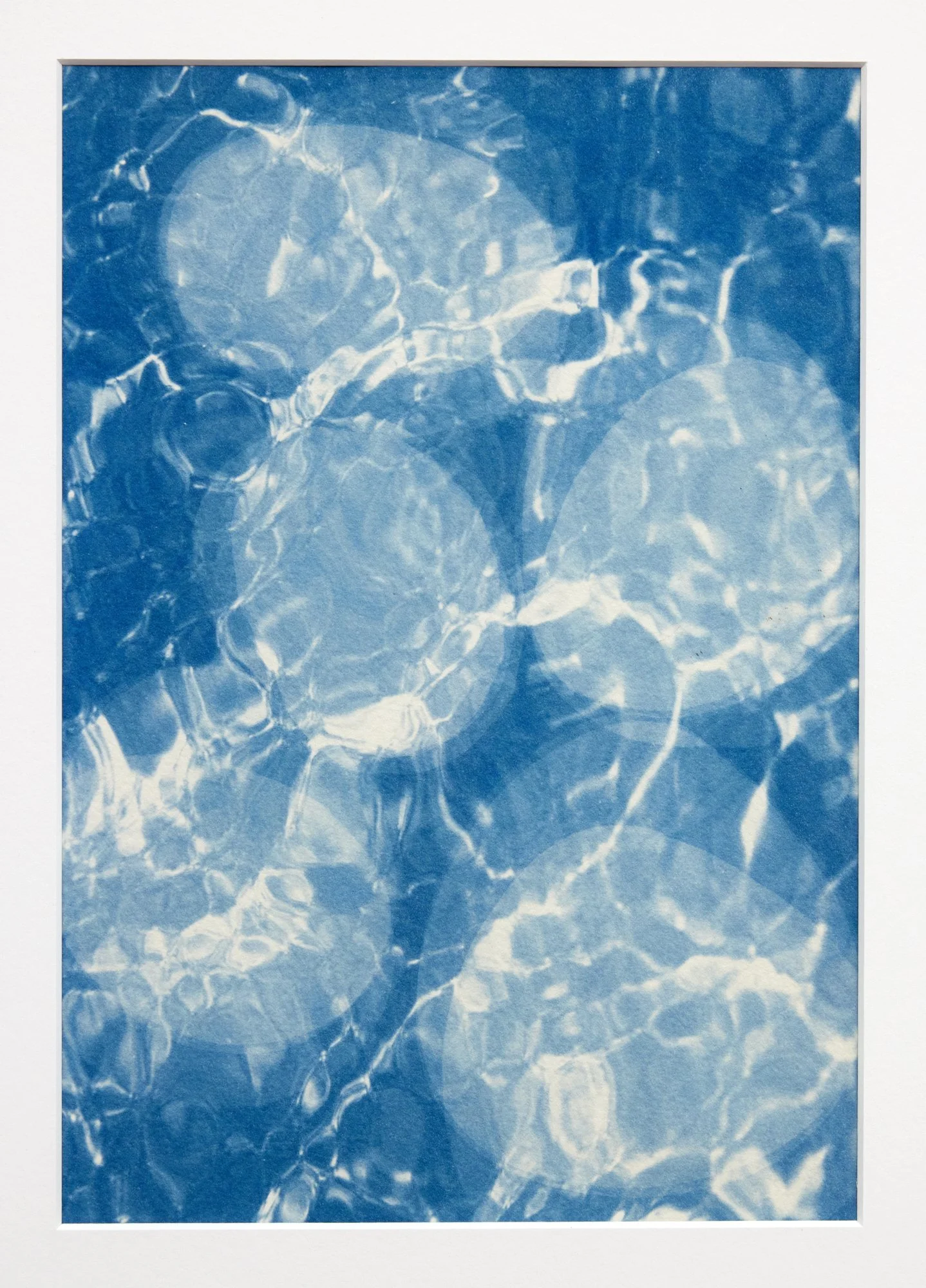
Another artist exploring transformative processes is Christina Little whose cyanotypes sparkle with the patterns of the sea swirling in the shallows on a sunny day. Made from layered exposures of water and ventifact stones, the images combine digital and analogue processes, yet are unique prints. Little is captivated by the beauty of ventifacts, which are washed up from oceans and rivers, and then spend a long time in one place where they’re shaped by prevailing winds into distinctive, polished, pyramid forms. Ventifact stones are found in deserts and shorelines throughout the world and are considered so geologically significant that in many places it’s illegal to remove them. Little’s cyanotypes register the ghostly forms of stones formed over deep time on the shores of Te Waipounamu.
Anne Marie Basquin’s three prussian blue cyanotypes were made with plants encountered on her daily walks around the Cape Rodney-Okakari Point Marine Reserve (Goat Island) area. Hung in tall, narrow strips on the gallery wall, they recalled the tradition of botanical wallpaper, which became more widely available to the public in 1839 when the first wallpaper printing machine was patented in Britain.(2) Coincidentally, this was the same year that Francois Arago announced the invention of photography to the French Academy of Sciences – and the world. (3)
Basquin worked with seeded prairie grass, banana passion fruit flowers and eucalyptus – all introduced species in Aotearoa, many of which can also be found in the Mid-West of the United States where the artist was born. Her work stitches together different temporal and geographical spaces, hinting at the mobility and tenacity of plants and people establishing themselves in new locations. The series’ title “Tessellations” refers to Basquin’s method of digitally scanning her cyanotypes and then recombining them to form repetitive, kaleidoscopic patterns. They evoke the exquisite cyanotypes of English botanist and photographer Anna Atkins who used the so-called ‘photogenic drawing technique’ to create a beautiful series of images made by placing botanical specimens directly onto paper coated with cyanotype chemicals. Her 1843 publication Photographs of British Algae: Cyanotype Impressions is considered the first commercially published book illustrated with photographic images.
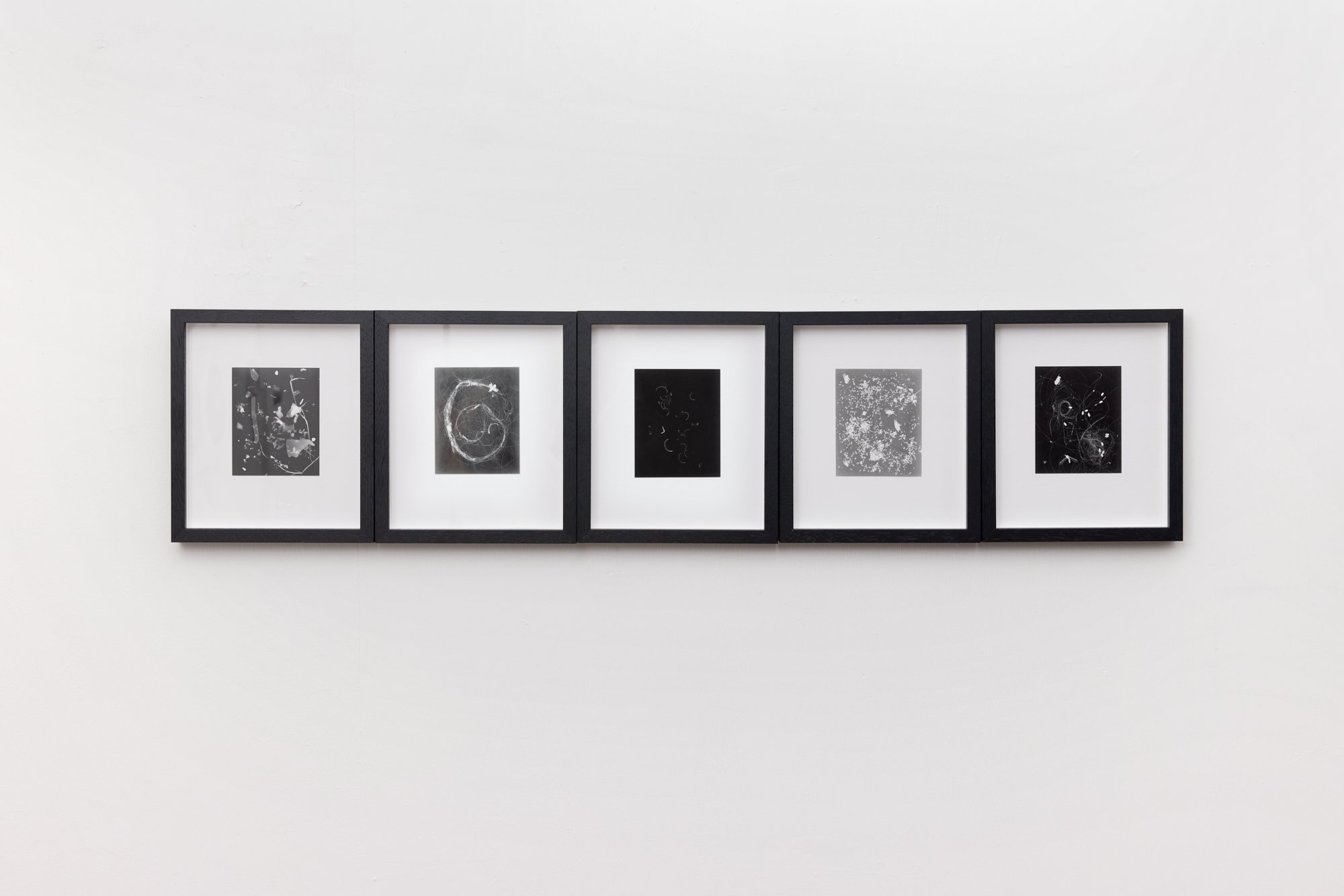
Like Atkins, the artists in RANGE have created extraordinary images by welcoming their subjects as active participants in the photographic process. In Cassey Locke’s silver gelatin photogram Debris #6, we see the squat body and stubby wings of a fly, human hairs, motes of dust and grit rendered at one-to-one scale in impossibly fine detail as the artist explores ideas about impermanence and death.
Cassie Locke, 2026
Unconventional chemistry underpins this exhibition – substances from plants and other materials are used to catalyse the developing process. Abbie Cossey’s moody, analogue photographs of kānuka were developed using liquid steeped in kānuka leaves; Charlotte Parallel toned her prints with substances from her botanical subjects – rosemary, willow and oak; Madeline Jones used her colour darkroom as a laboratory, working with botanical specimens embedded in handmade bio negatives; David Loughlin explored how material traces of land can be worked into the photographic surface, using soil, harakeke fibre and kawakawa developer in his atmospheric chemigram Karioi Maunga. To make the grid of eight prints in his work Surface Memory, he laid roadside dirt and a feather found on the edge of Manu Bay road in Whāingaroa onto photographic paper that is more than a century old. “The works are not photographs in the usual sense. They are impressions. Evidence. Small chemical weather systems. A collaboration between earth, feather and an obsolete surface that still remembers how to receive.” (4)
RANGE is a daring exhibition – one that signals a possible future for photography as it struggles to retain relevance, renewal and excitement in an age of digital mediocrity. As Batchen wrote in his book Emanations: The Art of the Cameraless Photograph, “Given our contemporary context, artists making cameraless photographs today assume that the photographic medium is and has always been a politically charged field; to engage the visual and chemical grammar of the photograph is to dispute and challenge that politics at a very basic level. Apart from anything else, to make such photographs returns photography to a unique, handmade craft and away from an automatic subservience to global capitalism and its vast economics of mass production and exploitation.” (5)
The artists in RANGE can be considered radical for many reasons – not least because they focus on the importance – and pleasure – of overlooked subjects, slow, experimental photographic methods, and unexpected results rather than the end product of their endeavours.
References
1) Batchen, Geoffrey. Emanations: The Art of the Cameraless Photograph. Prestel Publishing, 2016
2) Victoria and Albert Museum. 2024. “A brief histoy of wallpaper.” Accessed June 16, 2026. https://www.vam.ac.uk/articles/a-brief-history-of-wallpaper?srsltid=AfmBOoobeazEPPCw1FLA6SHdKzO5GJ9aPmpsMJwobijKhqPPi6omvkGS
3) Batchen, Geoffrey. Each Wild Idea: Writing, Photography, History. MIT Press, 2001
4) Loughlin, David. Instagram, 13 February 2026
5) Batchen, Geoffrey. Emanations: The Art of the Cameraless Photograph. Prestel Publishing, 2016
Virginia Were’s review was commissioned to accompany the Range exhibition at Eyes on Fire Gallery.
All installation photos by Kate van der Drift
The exhibition ran from 29 May to 18 June, 2026 and was awarded First Prize in the Auckland Festival of Photography Exhibition Award 2026, presented by Image Auckland.
Further information about Art Photo Practice workshops can be found here: Online Art Education