
New Zealand photographers in National Museum of China survey
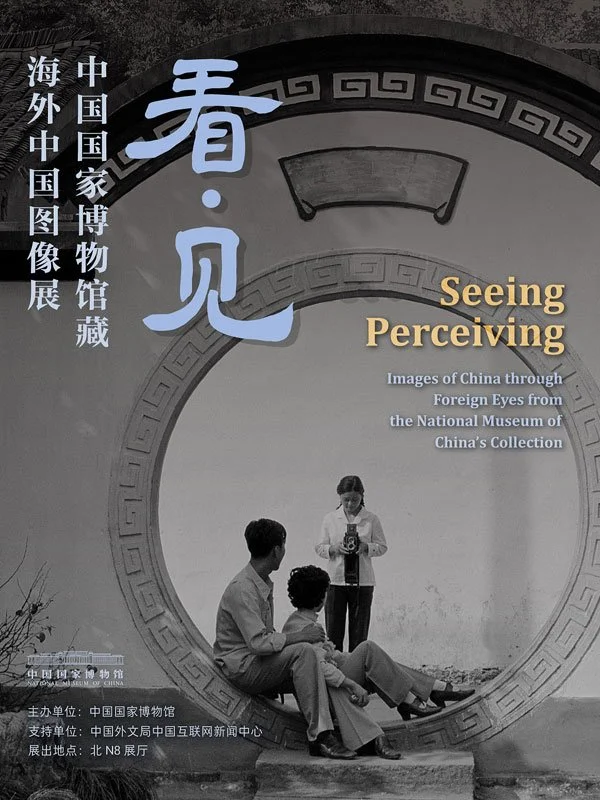
The poster artwork features a detail of an image by the Italian photograph by Andrea Cavazzuti: Hang Zhou, 1982. National Museum of China, Beijing.
Four New Zealand photographers are featured among the two dozen 20th Century photographers in Seeing and Perceiving: Images of China Through Foreign Eyes in the National Museum of China Collection in Beijing.
They are Rewi Alley (1897-1987), Robert (Tom) Hutchins (1921-2007), Brian Brake (1927-1988) and Geoff Steven (b.1944).
Opened on 30 May 2026, the closing date is yet to be decided and the catalogue is yet to be printed.
Venue: Gallery N8, National Museum of China. Admission details: https://en.chnmuseum.cn/visit_692/#res_admission
Exhibition profiled here by John B Turner
The exhibition, initiated by Ms Xiao Boyou, was created by a team working under senior curator Ding Chunyi at the Museum. To quote from their brief online promotion:
‘This exhibition features about 300 recently acquired images of China seen through foreign eyes, arranged chronologically in three thematic units: "Seeing from Afar," "Gazing," and "Perceiving." The images trace a journey from romanticized visions of China imagined from overseas, to on-the-ground observations during the country's modern transformation, and finally to the vitality captured after the founding of the People's Republic of China in 1949. They reflect the evolution of foreign perceptions of China, while also inviting us to look back at our own path of revival and to understand the diverse perspectives and civilizational essence of seeing China.’
Among the most prominent 19th Century visiting photographers featured in chronological order since 1860 are Felice Beato, John Thomson, and William Saunders. Among those representing the 20th Century are Hedda Morrison, and five of Brake’s Magnum colleagues: Robert Capa, Henri Cartier-Bresson, Eve Arnold, Marc Riboud and and Hiroji Kubota.
As one would expect from such a survey, there are unfamiliar names to add to one’s list of known practitioners which likely include the New Zealanders seen by the Chinese audience for the first time. For me the new names included Ernst Ohlmer, Sanshichiro Yamamoto, Max Hugo Weigold, Bertha A Gardiner, Walter Bosshard, Hilmar Pabel, Eva Sandberg, and Andrea Cavazzuti.
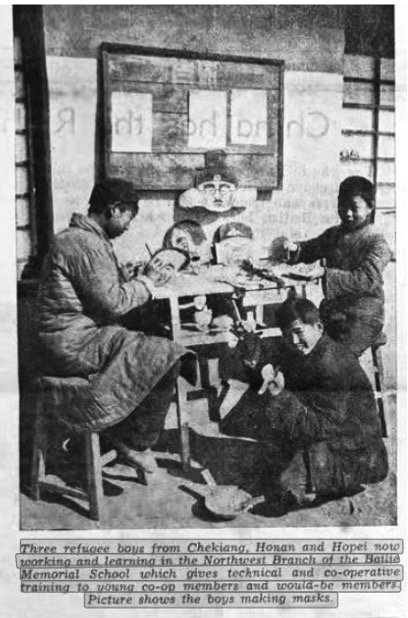
Rewi Alley (attributed): illustration and caption from China Defence League Newsletter of 15 May 1941, p.2. National Museum of China collection, Beijing.
Rewi Alley lived in China from 1927 through the Japanese invasion, Chinese Civil War and the Cultural Revolution until his death in 1987. Honoured as a friend of the People's Republic of China, he worked to combat poverty and provide work training through his Gung Ho cooperative schools. While much of his prolific writing survived through his books, his photographs are widely scattered, with many first destroyed during the Japanese invasion, and then in purges during the Cultural Revolution.
This exhibition is believed to be the first to recognise Rewi Alley’s work as a photographer. The sample is not an original photograph but a half-tone reproduction from the China Defence League Newsletter of 15 May 1941. They were published to illustrate an article based on his Hong Kong radio talk, ‘China Products for Resistance’, aimed to raise aid during the civil war leading to the birth of New China in 1949.
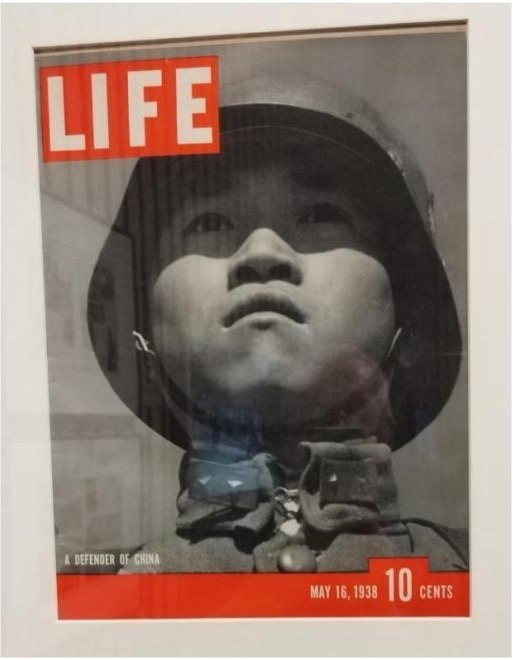
Robert Capa, Life magazine 1938. National Museum of China collection, Beijing.
The bold Robert Capa Life magazine cover for May 16, 1938 is also a stand in for an actual photographic print. It’s the famous war photographer’s closeup of a young boy helmeted up as a soldier, (whether real or playfully). Life editors added ‘A defender of China’ to the cover photograph which can be read as a sarcastic comment on the peril faced by China by the Japanese invasion at the beginning of World War II that Alley was also caught up in on the side of the Communist victors.
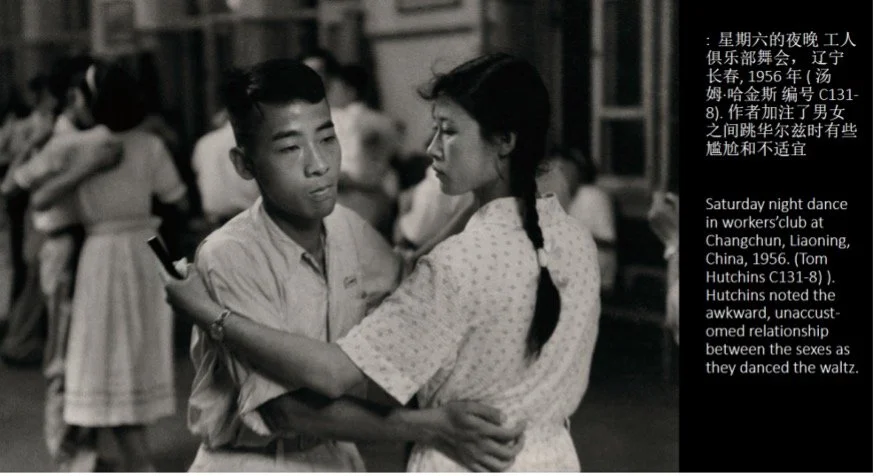
The illustration and caption of Tom Hutchins’ photograph above is not from the National Museum of China, exhibition but a detail from a previously shown slide presentation by John B Turner at a photography festival in Shenzhen, China.
Tom Hutchins was the chief photographer at the Auckland Star and gave up his job when the opportunity arose to see ‘Red’ China for himself in 1956. He spent four months as a freelance photographer there, with Life magazine featuring his work in early 1957. Hutchins became a pioneer in film and photographic education at the University of Auckland from 1965 to 1980.
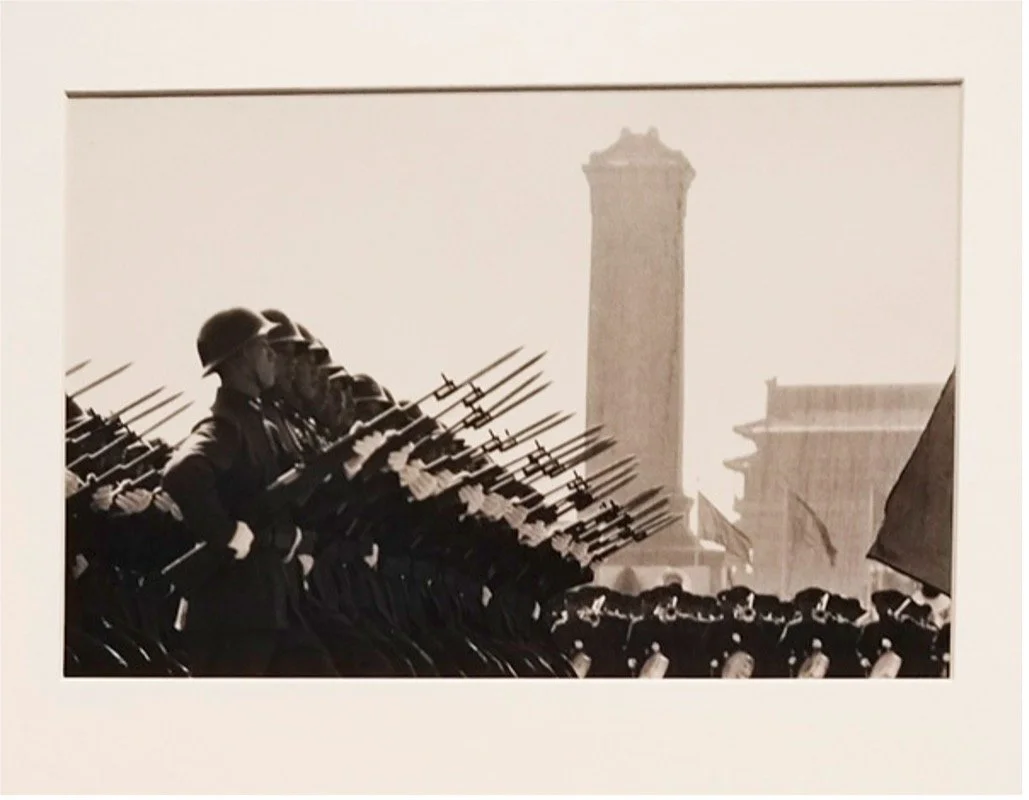
Brian Brake: Beijing 1956. National Museum of China, Beijing.
Brian Brake, as a new member of the Magnum picture agency first visited China in 1957 and returned in 1959 for the People’s Republic’s 10th anniversary celebrations. Both Hutchins and Brake virtually made their names through Life magazine during the 1950s and 1960s with Brake becoming New Zealand’s most celebrated photographer. Both are represented by seven original small-scale 20x25cm prints.
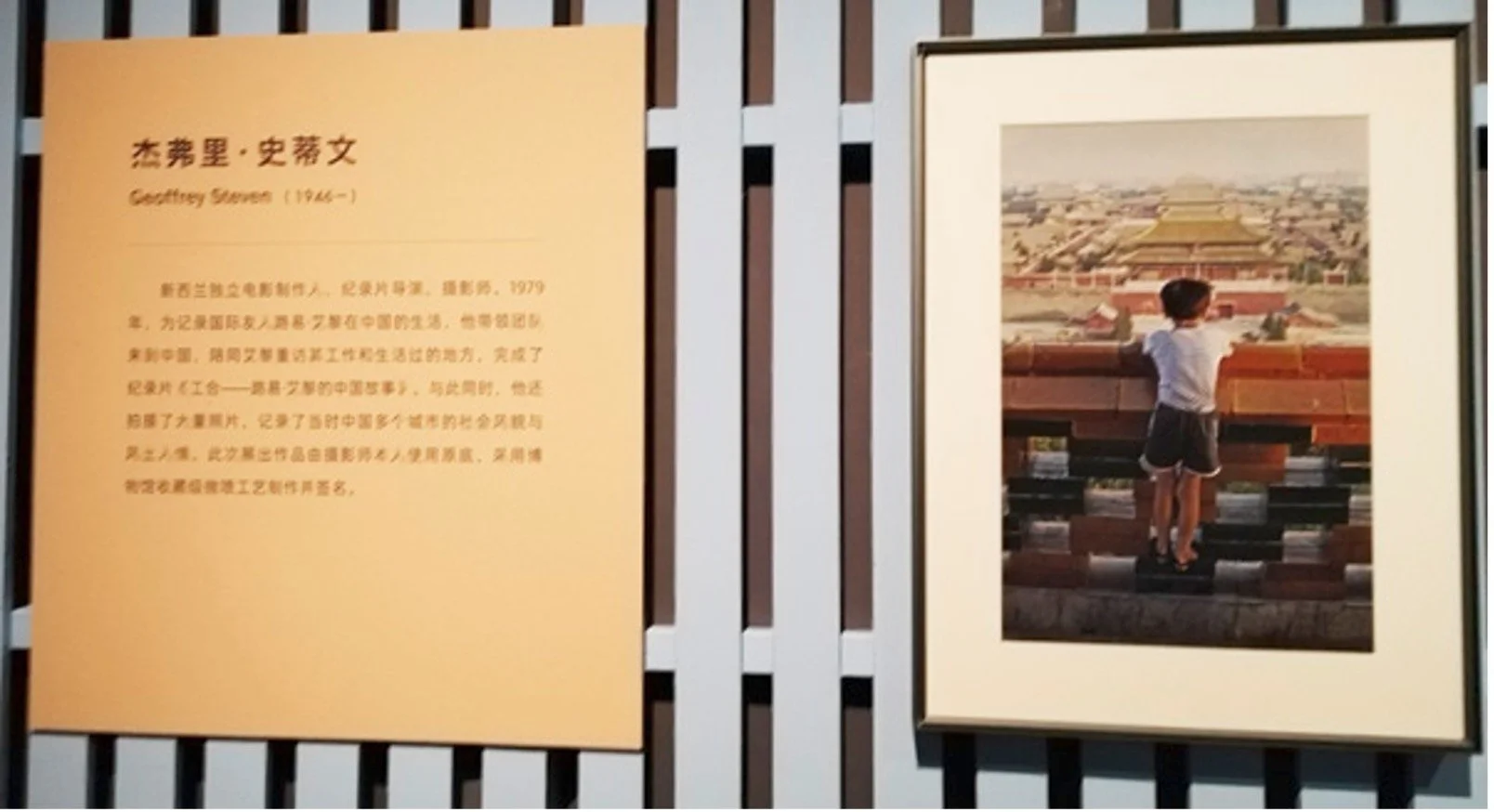
Geoff Steven: Beijing, 1979. Collection of National Museum of China, Beijing. (Apologies for rough installation photograph.)
Geoff Steven (1944-) is the fourth New Zealand photographer represented. He worked first as a photographer then became best known as a film director and television executive. He directed the 1979 television documentary ‘Gung Ho - Rewi Alley in China’. Following his television work he continued his personal photography and founded Our Place the World Heritage Collection project which documents major heritage locations in photographs.
John B Turner (82) is a retired lecturer in photography from the University of Auckland where he worked with Robert (Tom) Hutchins from 1971 to 1980 when Hutchins retired. Turner was the founding editor of Photo-Forum magazine and moved to China in 2012 to continue his work and research on Hutchins’s China essay.